As Flood Risk Increases in Himalayas, Nepal Builds More in Vulnerable Areas
The total footprint of buildings along flood-prone riverbanks in the Himalayas grew by half in recent years, a study found.
The argument for bringing liquefied natural gas to Oʻahu is straightforward enough. LNG could replace oil for a period, potentially lower generation costs and give Hawaiʻi more time to build out renewable electricity. The difficulty is that Hawaiʻi law requires electric utilities to reach 100% renewable electricity generation by 2045, ... [continued]
The post Hawaiʻi’s LNG Bridge Has An Expensive Exit appeared first on CleanTechnica.
An October 5, 2026 letter to the editors of the Boston Globe reads as follows: “So we are preparing to spend billions of dollars adapting to the effects of climate change. Sea walls, levees, and other forms of flood prevention are definitely needed, and there’s no time to waste. But ... [continued]
The post Why Are We Choosing Between Affordability And A Clean Climate In Our Elections? appeared first on CleanTechnica.
In Montgomery County, Indiana, utility-scale solar projects appear on an official list of undesirable land uses that also includes “adult-oriented businesses.”
WHEN VinFast brought its electric buses to Busworld Europe 2025, the Vietnamese automaker was making its first major international move in the electric bus market. The company displayed the EB 8 and EB 12 in Brussels in October 2025 as it looked beyond Vietnam for new markets. North America was ... [continued]
The post VinFast’s Electric Buses Headed for the US Began Journey in Brussels appeared first on CleanTechnica.
NPR's Steve Inskeep talks with former NOAA official Carolyn Gruber about vulnerabilities in the infrastructure of coastal cities during extreme weather events.

Maryland environmental regulators say jet fuel continues to seep into Piscataway Creek from Joint Base Andrews more than six months after the spill was reported, despite the base’s assurances that it has isolated the damaged fuel system and stopped the leak.
Haze arrives just before Singapore Grand Prix gets underway on Friday
Number of breeding chinstrap penguins on Zavodovski Island fall from over a million to 400,000
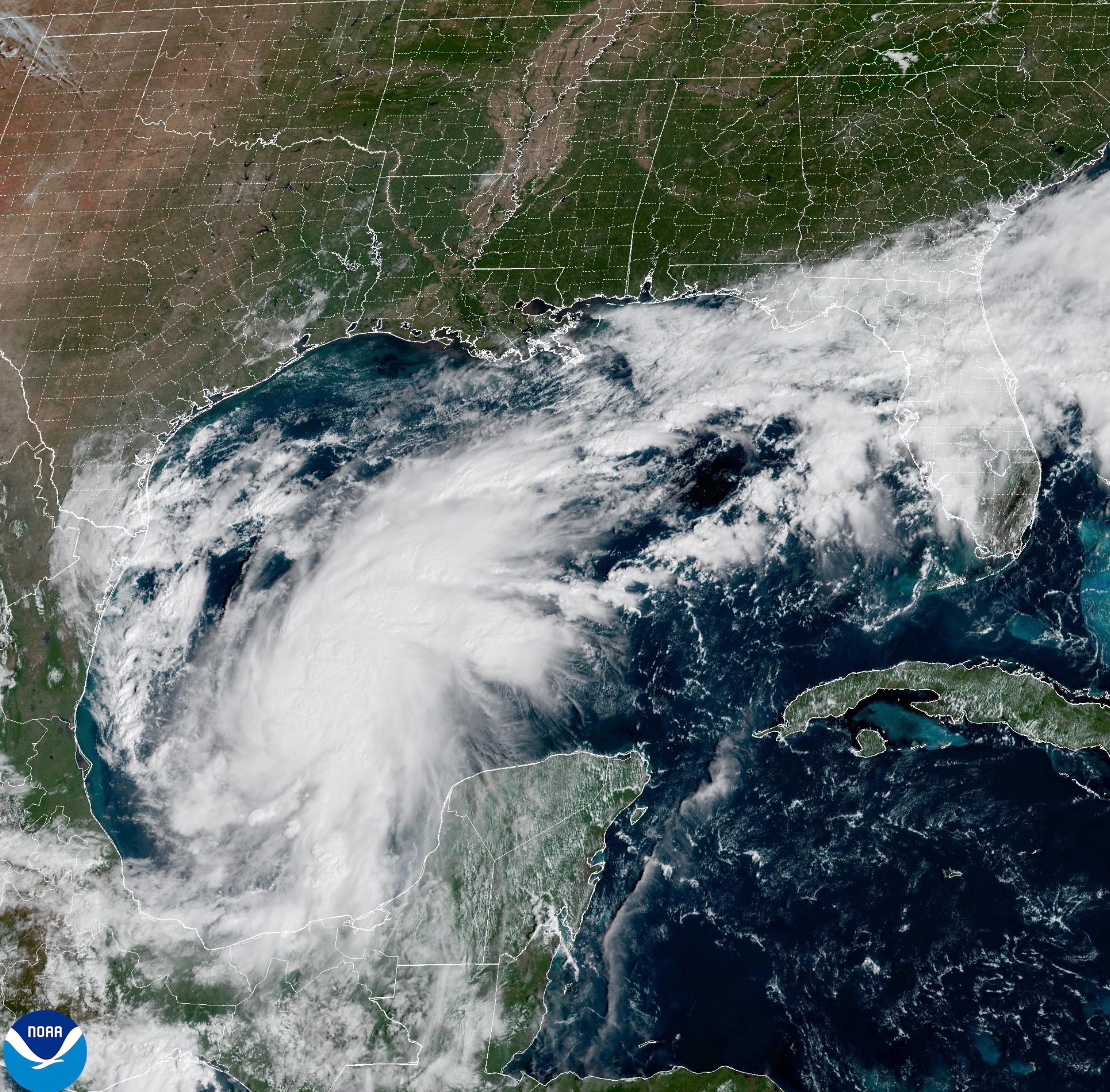
The National Hurricane Center said late Wednesday that the hurricane was on track to strike the U.S. Gulf Coast later in the week. It's expected to bring heavy rains and potentially flash flooding.
(Image credit: National Oceanic and Atmospheric Administration)


AI isn’t just a “surf’s up” moment. It’s a tsunami. You have to surf that tsunami, just to keep from drowning.
Using your time. Your calendar is your surfboard.
What’s your best beach for riding that calendar?
Well, right now there are countless conferences with “AI” or “Agentic” in their titles. Yes, they’re beaches. You can ride there.
But where will you get the most done? Where can you write the agenda, and work with other people dealing with the same problems or pursuing the same opportunities? Real people doing real work. People who can help.
Really, do you want to hear yet another CEO blather about what their VCs and marketing people want them to say?
Or do you want to get work done?
IIW was made for getting things done. It has been a wide beach for surfing big tech waves since 2005, twice a year at the Computer History Museum in Silicon Valley. The next one is our 43rd. It’s on November 3rd to 6th, less than a month from now.
We immodestly believe that IIW is the most leveraged conference in the world. Two reasons:
And that’s you. IIW is what you make of it.
So join us. Register here.
You’ll leave wet but a lot more fit.
Every driver — human or autonomous — can encounter the unexpected. The best time to work out how to respond to an emergency is before it happens. Automated vehicles operate in dynamic environments where unexpected events can occur. Beyond collision avoidance, AV fleets need tools to prepare for and respond ... [continued]
The post Preparing for the Unexpected: A New Framework for AV Incident Management Exercises appeared first on CleanTechnica.
Before celebrating the benefits of the Bipartisan American Affordability and Jobs Act of 2026, we need an honest accounting of its tradeoffs, especially how much additional fossil fuel development the bill could enable—and at what cost. The permitting bill that’s dominating debate in Washington, D.C., has become a political Rorschach ... [continued]
The post Hard Questions About the Permitting Bill appeared first on CleanTechnica.
By implementing a comprehensive food waste diversion policy, states can create thousands of new jobs, generate billions in economic activity, enable market conditions to develop cost-effective local programs, make more food available within communities, and reduce climate pollution. Food waste is understood to be an environmental issue, but it is ... [continued]
The post Food Waste Diversion Can Deliver Billions in Economic Benefits appeared first on CleanTechnica.
First all-electric GTI delivers 166 kW (226 PS), offers 290 Nm of torque, accelerates to 100 km/h in 6.8 seconds and reaches a top speed of 190 km/h With new “GTI” driving profile, front axle differential lock, adaptive DCC sports suspension, electric route planner and up to 431 km WLTP range ... [continued]
The post 50 Years of Driving Pleasure, Now Electric: Volkswagen Launches Pre-Sale of the ID. Polo GTI appeared first on CleanTechnica.
A recent New York Times newsletter described fatal e-bike and electric-scooter crashes in New York City as reaching a record high. “Record” is a powerful word, especially when the vehicles involved are relatively new, but it can also direct attention toward what the victim was riding and away from what ... [continued]
The post NYC’s E-Bike & Scooter Death Headlines Leave Out a Vehicle appeared first on CleanTechnica.
Ozone pollution from fires, along with extreme heat and drought, is further weakening the Amazon rainforest’s ability to absorb carbon dioxide, new research shows.
In 1991, Random House published a picture book called “Teenage Mutant Ninja Turtles: ABC’s for a Better Planet,” in which the masked cartoon turtles trade in their signature nunchucks for signs bearing environmental slogans.
It’s here! The much ballyhooed all electric Jaguar sedan luxury tourer known as the Type 01 had its official debut in New York City this week. Why would this uniquely British automobile debut in New York and not London? Perhaps it is because the company expects the US to be ... [continued]
The post Jaguar Type 01 Debuts In New York City appeared first on CleanTechnica.
US President Donald Trump stamped his seal of approval on a new solar factory in Texas this week, having dispatched an official from his administration to represent himself on a celebratory tour of the newly completed facility. That doesn’t necessarily mean the war on solar power is over, but it ... [continued]
The post Trump Officially Throws In The Solar Power Towel (Shocker!) appeared first on CleanTechnica.
Chinstrap penguins on Zavodovski Island in Antarctica down by two-thirds since 2011, probably due to climate crisis
The world’s largest penguin colony has declined by two-thirds since 2011, most likely because of the climate crisis, a study has revealed.
Scientists said the rapid demise of chinstrap penguins on Zavodovski, the northernmost of the South Sandwich Islands in Antarctica, increased the risk of a wider ecosystem collapse.
Continue reading...Solar energy is an American success story. Since the creation of the first silicon solar cell 70 years ago, solar leaders have been innovating, improving efficiency, lowering costs, and growing this American-born technology into an essential part of our nation’s energy system. In 2025, solar and storage accounted for 79% ... [continued]
The post The Solar Century: Landmark Moments in the History of Solar Energy appeared first on CleanTechnica.
It isn’t hard to see a contradiction between the PM’s message in Fiji and his opposition to legal action to stop a NSW coalmine
Get our new political email, free app or daily news podcast
There are unlikely to be many bigger moments in Australian community action on the climate crisis this year than a judgment by the high court on Wednesday.
In what may prove a historic victory, the court sided with a handful of community members in the Hunter Valley to overturn a state regulator’s approval of a coalmine expansion that allowed it to operate until 2048. This doesn’t happen every day, and the judgment could have ramifications for other coal developments in New South Wales.
Sign up for Guardian Australia’s Politics, really newsletter here
Continue reading...Creating a loop: publish information, listen for what is still unclear, verify it and update the coverage accordingly Community-rooted newsrooms have an urgent role to play during moments of collective uncertainty. Often embedded in — and led by members of — the communities they serve, these newsrooms build deep trust and lasting relationships that become especially important when information…
States are recognizing the potential for tangible emissions reductions with broad co-benefits when it comes to embodied carbon. The built environment hides more climate-warming pollution than you think, and reducing it is the next frontier of climate action. While policymakers have focused for decades on operational emissions—from heating, cooling, and ... [continued]
The post Building Codes, Buy Clean, and Beyond: An Embodied Carbon State Policy Playbook appeared first on CleanTechnica.
Inquest under way into why President Lula’s success in curbing Amazon deforestation has not led to success at polls
More fire, more ash, more crime, more death. And a globally important ecosystem driven ever more rapidly towards a point of no return. That is the prospect for the Amazon rainforest for at least the next four years if Flávio Bolsonaro holds on to the lead he established this week in the first round of Brazil’s presidential election.
This appears to be of far more concern to the outside world than to voters in Latin America’s biggest, richest and most biodiverse nation.
Continue reading...Sólo en tres de los glaciares monitoreados los balances de masa fueron positivos en el período 2022-2025. La mayoría registraron pérdidas de entre 0m y -6m de equivalente en agua. Fuente: OMM, “El estado del clima en América Latina y el Caribe 2025”
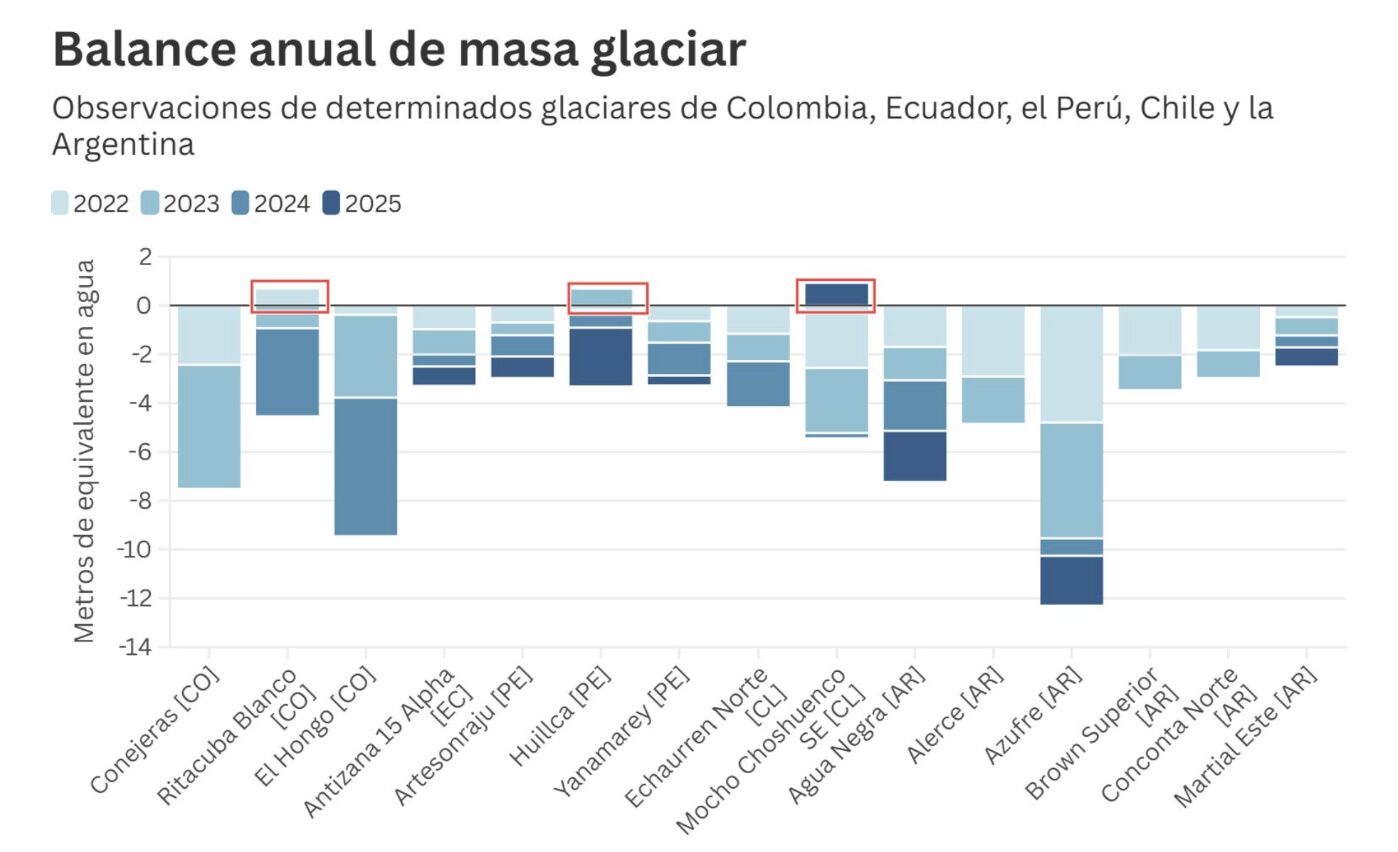
Hoy abre sus puertas la Uni Climática, el espacio de formación anual de la revista Climática que incluye clases magistrales y talleres. La masterclass inaugural estará dirigida por la socióloga italo-mexicana Alice Poma. En este podcast, avanza qué papel juegan las emociones en la respuesta colectiva ante fenómenos como El Niño
The post Somos la generación que está viendo desaparecer los glaciares appeared first on Covering Climate Now.
If there was a year the world began waking up to climate change, it might have been 1988. That June, the NASA climatologist James Hansen testified to Congress that the climate was warming and would continue to do so as long as humans pumped fossil fuel pollution into the atmosphere. Months later, the United Nations established the Intergovernmental Panel on Climate Change.
High Court upholds decision rejecting MACH Energy’s bid to keep Mount Pleasant mine running until 2048 and double its output
Island nation is one of the world’s biggest emitters on a per capita basis
‘Techno-optimism’ may lead to reliance on unproven solutions at expense of societal changes needed
Scientists who believe technology will largely solve the problems caused by the climate crisis are less likely to engage in civic action on the issue, according to a study.
The report from the London School of Economics found they are 23% less likelyto sign petitions or take part in protests than peers who doubt that technology is the answer. They are also 18% less likely to make high-impact lifestyle changes, from reducing flights to changing to a vegan or vegetarian diet.
Continue reading...A huge e-bike from the California-based company Kingbull Bikes provides a much-needed alternative to walking, pedal biking, or driving around an area characterized by seriously annoying hills.
The post A Small Bike Rider Falls In Love With A Gigantic Kingbull E-Bike appeared first on CleanTechnica.
Government report finds the country could be hit with more frequent and intense heatwaves, as well as damaging storms and cyclones
New Zealand could be hit with more frequent and intense heatwaves and catastrophic glacier melts in the near future, as greenhouse gas levels hit record highs, a new report about the nation’s climate has revealed.
Released on Wednesday, the Our Atmosphere and Climate 2026 report shows New Zealand is experiencing mounting climate pressures, which will have wide-reaching implications for the environment, native species and communities.
Continue reading...We worked with Illinois Answers Project to reach potential users for its campaign finance tool Millions of dollars has been raised by candidates in the 2026 Chicago School Board election thus far. To follow the money, Illinois Answers Project from the Better Government Association built a free campaign finance tracking tool that gives users alerts when someone donates to a political campaign…
Didn't know there was one, but yeah
Chick-fil-A takes a stand against fast-food drive-thru AI trend.
Maybe