Forty states now have laws protecting citizens and newsrooms from meritless lawsuits designed to sue them into silence More than three-quarters of the country now offers legal shields against Strategic Lawsuits Against Public Participation (SLAPP), protecting citizens, including journalists, from being dragged through the court system for frivolous legal claims designed to intimidate and…
All posts by media-man
Mother Jones and PRX Launch “Stress Test,” a Podcast in the Lead-Up to the Midterm Elections
Mother Jones and PRX Launch “Stress Test,” a Pop-Up Podcast in the Lead-Up to the Midterm Elections
“A place to figure out, together, how to think about the biggest issues driving the midterms”

The 2026 midterm elections are a referendum on where the country is headed, and Mother Jones is capturing that energy and uncertainty in Stress Test, a new pop-up podcast tracking the fight for power, the money involved, and the major issues across the nation all the way through Election Day.
Available via video and audio, the first episode aired October 2 and is available for free on Mother Jones’ YouTube page, major podcast platforms, and Mother Jones’ website. The episode focuses on election interference and key issues such as the Supreme Court’s decision on mail-in voting and retreat from the Voting Rights Act and the prospect of seeing ICE agents at the polls.
On new episodes every Wednesday and Friday, Mother Jones’ Washington DC Bureau Chief David Corn and video correspondent Garrison Hayes will trade off in the host chair in conversation with Mother Jones’ acclaimed journalists, connecting the day’s headlines to the newsroom’s deeply reported coverage of the issues and people influencing the election:
Stress Test, from Mother Jones
“Stressed out by this election? Me too. Luckily, I work with incredibly talented journalists, and this show is a release valve — a place to figure out, together, how to think about the biggest issues driving the midterms,” said James West, executive editor of Mother Jones. “You’ll be in great hands with David, Garrison, and a cast of Mother Jones reporters who will help you understand everything from the real threat of election interference and immigration enforcement to the backlash against data centers and the war in Iran.”
Hayes is an award-winning journalist whose work explores the intersection of history, culture, and power. Known for connecting today’s headlines to the history behind them, Hayes is an NAACP Image Award nominee, two-time Webby Award winner, and NABJ award winner and was named to the 2026 EBONY Power 100 List.
Corn is a veteran investigative journalist and political commentator and has written for Harper’s, The Nation, The New Republic, The New York Times, The Washington Post, and the Los Angeles Times. He is the author or co-author of five New York Times bestsellers and has won the George Polk Award and a National Magazine Award.
Mother Jones is produced by the Center for Investigative Reporting, which also produces the weekly investigative public radio show and podcast Reveal and the weekly interview podcast More To The Story. The Center for Investigative Reporting is listener and reader supported, with offices in San Francisco; Washington, DC; and New York City.
Stress Test, Reveal, and More To The Story are brought to listeners in partnership with Pulitzer-winning public media organization PRX.
Stress Test, from Mother Jones
Mother Jones and PRX Launch “Stress Test,” a Podcast in the Lead-Up to the Midterm Elections was originally published in PRX Official on Medium, where people are continuing the conversation by highlighting and responding to this story.
Covering Women’s Health
For this issue, we handed things over to Jessica Kutz, the climate reporter at The 19th News, a nonprofit news organization that reports at the intersection of gender, politics, and policy. For the last five years, she has focused on how climate change affects women’s health and also their pocketbooks, parenting, and activism.
Story Spark: Women’s Health
Women and girls carry a disproportionate burden from the climate crisis. They are more likely to lack the resources they need to recover after a disaster, live in substandard housing that’s more exposed to the elements and, in times of crisis, are more likely to navigate trauma and displacement while being the sole caregiver for a family member.
Just as importantly, their health — and, if they are pregnant, that of their fetus — is vulnerable to a host of environmental hazards made worse by climate change. Wildfire smoke and extreme heat are also strongly linked with adverse birth outcomes, including low birth weight, miscarriage, and preterm birth. Disasters disrupt access to menstrual and reproductive health supplies. And as a baseline, women are physiologically more susceptible to extreme heat than men, something that early research suggests can make menopause symptoms worse.
And yet, women’s health is vastly understudied — and in the US, research on both climate change and gender has come under attack.
Reporting Tips
Reach out to birthworkers. In many ways, medical associations are still catching up on how to treat and advise pregnant people about the dangers climate change poses to their pregnancies. Midwives and doulas, on the other hand, protect the health of a pregnancy more holistically. They can see if a patient’s home has air conditioning, identify potential work hazards, and advise when a pregnant person has questions about things like wildfire smoke. Because of this, I have found midwives and doulas to be great experts. They also play crucial roles after a disaster hits a community by connecting pregnant and postpartum people to healthcare and other resources.
Consider the context of the country. Socioeconomic and cultural factors create different types of vulnerabilities that can’t be applied globally — what’s true in India may not be true in the US. Leaning on global statistics around issues like women’s lack of access to water or even mortality rates of women during heatwaves may not be accurate for your country.
Connect the dots and dig deeper. How climate change impacts women specifically is underreported. To get you started, here are a few ideas to explore: Women’s ability to control their reproductive health can be affected by climate change. Did a disaster in your community make it more difficult to travel for a pregnancy? Or for an abortion? Or to access emergency contraceptives or menstrual hygiene products? Is anyone doing anything to fill in the gaps?
Women are more likely than men to develop dementia and people with dementia are more susceptible to health consequences of extreme heat; several lawsuits have been filed against senior care facilities after women have wandered away and subsequently died due to extreme heat.
More prompts to get you started. What policies are in place to protect women with some of these health conditions from climate disasters? Has a disaster or incident in your community highlighted the absence of such policies or a lack of preparedness? Pick a health condition and explore whether it disproportionately impacts women and has a climate connection.
Stories We Like
For stories to help inspire your reporting on the intersection of women and climate change, check out Kutz’s author page on The 19th News. We particularly like these pieces:
- A group led by formerly incarcerated women who sued to get air conditioning in every Texas prison — and won.
- Parenting through the LA wildfires was a challenge — with mothers helping their children cope with the loss of safety and stability amid a climate disaster.
- Hurricane Helene, which was made more powerful due to climate change, impacted the already fragile reproductive health ecosystem in the Carolinas.
 Jessica Kutz is the climate reporter at The 19th News, a nonprofit news organization that reports at the intersection of gender, politics and policy. Kutz wrote today’s edition of Locally Sourced.
Before We Go…
The next Locally Sourced will revisit and explore climate change’s impact on home insurance. Homeowners are facing soaring insurance costs — or the loss of coverage altogether — as extreme weather becomes more frequent and intense due to climate change. Have you reported on this growing issue? Send them to us at local[at]coveringclimatenow[dot]org. We’d love to consider them for the next edition of Locally Sourced and our media trainings and social platforms.
Want more story ideas? Check out the Locally Sourced archive for more topics to explore, including AI data centers, coastal flooding, air transportation, and more.
Know someone who might be interested in this newsletter? Forward Locally Sourced to a colleague!
The post Covering Women’s Health appeared first on Covering Climate Now.
US households pay 62% more for water than they did a decade ago, study finds
For-profit water corporations, federal cuts and climate crisis are ‘supercharging water rate hikes’, study co-author says
US households are paying 62% more for drinking water than they did a decade ago – outpacing inflation, grocery prices and household incomes, according to a new study.
Food & Water Watch, a Washington DC-based non-profit, analyzed 2025 billing data from the 500 largest community water systems in the US, which together serve about 155 million people, or 45% of the country’s population. The analysis compared current rates with data from a similar Food & Water Watch survey conducted in 2015. The study does not include wastewater or storm water charges, which are often billed separately from drinking water service.
Continue reading...Yemen’s pregnant women face double toll of conflict and extreme heat
Already facing extreme conditions, an exodus of charities in the wake of international aid cuts is only making matters worse. Nick Ferris reports
War With Iran Is Forcing the World to Reckon With Geography’s Power
Trade blockages in the Persian Gulf have reminded the world that there are forces as great as or greater than technology and globalization.
Supreme Court Weighs Landmark Climate Deception Case Against Oil Companies
The justices’ ruling could decide whether more than two dozen similar claims proceed. The cases accuse oil companies of misleading the public about climate change and stymieing efforts to curb emissions.
The U.S. Supreme Court heard arguments from oil companies on Monday that could help decide the fate of more than two dozen lawsuits accusing the industry of deceiving the public about climate change. The claims seek potentially billions of dollars in damages to help pay the costs imposed by climate-related extreme weather.
WaningCrescentMoonday

That’s what it says at MoonPhase.today
Specifically, 26%.
I’ll consider them unreal if they’re not at IIW.
The UOR Foundation has plans to… Well, I can’t copy and paste the text, so here’s a screengrab:

I’ll say not. Quite.
AM I? | A Documentary About AI Consciousness.
Ever notice the groovy ditches in tidal swampland?
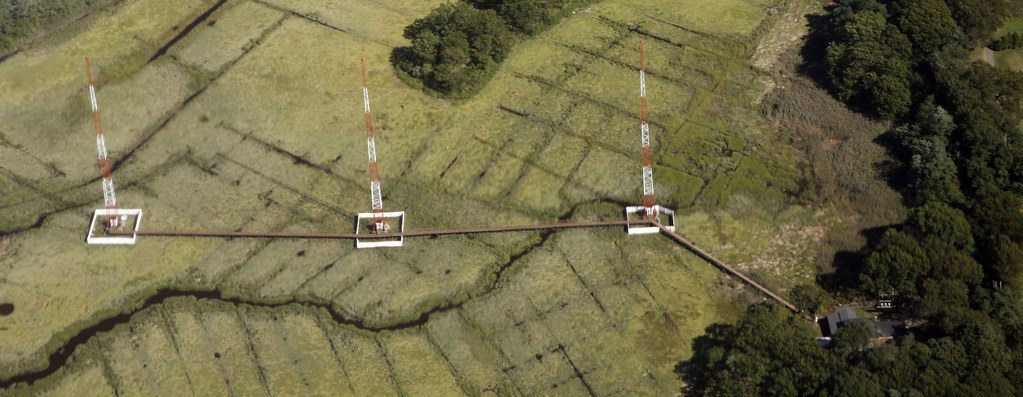
It’s called “grid ditching,” and is explained here:
Grid Ditching
The grid ditch system still evident on our salt marshes today, were dug by hand between 1928 and 1934. The primary purpose of this era of ditching was to put as many people to work as possible, as this was the time of the great depression. No entomological studies were conducted in conjunction with this ditching effort; mosquito control was a secondary consideration at best.
However mosquito control was achieved by default as practically every square inch of marsh was drained by the extensive project. Some engineering studies were done to determine where and at what intervals ditches were dug. Ditches were dug in straight rows by hand with sod saws and two man shovels. In 1934, at the peak of this ditching effort, over 11,000 men were employed digging ditches and when completed nearly 3,000 linear miles of salt marsh ditch were dug in Massachusetts alone.
Virtually all salt marsh in New England was ditched with the exception of one marsh in Rhode Island. Later in the late 1940s and early 1950s soldiers returned home from World War II. Housing shortages were a big problem in the more populated areas particularly in and around Boston. A generation of young families, eager to get their lives back on track migrated to the north shore of Massachusetts to start new lives.
This migration coincided with the degradation of the grid ditch system created in the 1930s. These ditches had not been maintained and now produced far more mosquitoes then they had initially eliminated. By many accounts it was so bad some considered the area to be almost uninhabitable. A few local programs were established to try to reopen the ditches but it was impossible to duplicate the labor force that had originally created the ditches.
In 1958, a grass roots effort, fueled by public demand for relief resulted in legislation establishing the Essex County Mosquito Control Project. For reasons unknown the project was not formally funded until 1965. Equipment was purchased and a major effort was launched to reclaim salt marsh ditches.
Salt Marsh Ditch Maintenance in Northeast Massachusetts
In the late 1970s, Walter Montgomery was an equipment operator for what was then, the Essex County Mosquito Control Project, ECMCP. Montgomery’s primary duty was to maintain the extensive salt marsh grid ditch system, excavated for the most part, between 1928 and 1934.
Montgomery recalls using an implement known as a scavel plow; this was a large wedge shaped device mounted under a wing plow and could be attached to the front of a tractor or sometimes towed behind. A scavel plow wedge was basically constructed to the original ditch dimension. The wedge would be dropped into the ditch and the tractor either pushed or pulled it along. As the wedge peeled spoil out of the ditch the wing plow would roll the spoil into furrows approximately six feet wide on both sides of the ditch. These furrows of spoil were then either run over to flatten them or plowed off the marsh.
On a productive day Montgomery recalls completing two or more miles of ditch maintenance but even at that rate maintenance of hundreds of linear miles of ditch was an endless endeavor. It was Montgomery’s experience that freshly maintained ditches were really only effective for about two years before requiring additional maintenance.
Typically ditches would become blocked on the high marsh and previously drained salt pannes would often reestablish. Montgomery observed that the open water areas of these pannes or ponds didn’t have mosquito larvae but the grassy sheltered areas around the edges or isolated depressions adjacent to the ponds, supported mosquito larvae.
Montgomery’s observations further supported his belief that continued maintenance of the grid ditch system was not productive and furthermore there had to be a better way to manage salt marsh mosquito populations.
That is from a .pdf titled MASSACHUSETTS MOSQUITO CONTROL OPEN MARSH WATER MANAGEMENT STANDARDS MAY 2010. It is worth continuing to read, if mosquito control is your jam.
Alas, as you may gather by now, everything is my jam.
A long and winding road: Travel journalism in the modern era
Brendan DeLuca-Rodenberg is a writer with a focus on features, especially travel pieces. He graduated from Mizzou with a master’s in journalism. Advancements in networking and technology have given rise to travel content unlike anything else we have seen before, and much of it can be made by anyone with a camera or a phone. In a world with no shortage of travel content…
US supreme court hears big oil’s bid to block climate damage lawsuits
How the court will lean is unclear amid Suncor Energy and ExxonMobil’s attempt to stop lawsuits at state level
The US supreme court began its new nine-month term hearing arguments on Monday in a major case in which big oil companies attempted to strike a fatal blow against lawsuits that seek to hold them accountable for the climate crisis.
After the almost two-hour hearing, while it was not yet clear which way the justices were leaning, experts said the court may find it challenging to write a majority decision siding with industry.
Continue reading...Tory plan to cut energy efficiency rule for builders will cost new home owners £1,000 a year, says thinktank – as it happened
A researcher at a climate change think tank says the Conservative policy would be a ‘disaster for first time buyers’
Yesterday, as a gimmick, the Tories were handing out “Bottler Burnham” bottles of water (“0% strength”) to make a point about Burnham supposedly cancelling plans for an early election under pressure from the Tories. It is a version of a stunt they pulled in 2008 when they gave journalists bottles of a “Bottler Brown” beer. (Gordon Brown did pull plans for an early election at the last minute; this time the jibe is unfair, because there were no Burnham plans for an early election.)
The new bottles feature the image of Burnham produced by the Manchester artist Stan Chow.
The SNP’s effective ban on new nuclear energy in Scotland flies in the face of common-sense.
No part of Great Britain should be missing out on plans for new nuclear renewal.
Continue reading...Ranchers and Fire Survivors Gather Outside Supreme Court to Support Boulder
Some rural counties in Colorado have sided with the oil firms in the case.
The Supreme Court may not decide the case after all.
The justices lack jurisdiction unless the ruling under review is final, and that question is contested.
Wave of Affordable Electric Cars Is Boosting Consumers’ Choice: Sales of Sub-€25,000 Models Set to Rise Sevenfold
Electric car choice is expanding rapidly thanks to EU clean car targets, but weakening the 2030-35 targets would put affordable models and Europe’s position in the global EV race at risk. European drivers are gaining access to a rapidly expanding range of more affordable electric cars, protecting drivers from Europe’s ... [continued]
The post Wave of Affordable Electric Cars Is Boosting Consumers’ Choice: Sales of Sub-€25,000 Models Set to Rise Sevenfold appeared first on CleanTechnica.
Introducing our public storytelling guide to help newsrooms connect with people with intellectual and developmental disabilities
Tested by Tucson Spotlight, Baltimore Banner and Arizona Public Media, our guide is ready for you to use in your community We are so excited to announce the public storytelling event guide built in collaboration by WORDSLAW and the RJI Innovation Team is now ready for newsrooms to utilize. This step-by-step guide walks you through each of the steps to host a public storytelling event…
T&E, European Metals, and RECHARGE Call on Co-decision Makers to Strengthen Battery Supply Chains in the IAA
As negotiations on the Industrial Accelerator Act (IAA) progress, a joint letter by T&E, European Metals and RECHARGE calls on the integration of primary and recycled battery grade materials, as well as critical midstream components like pCAM and AAMs. The IAA is a first strong first step towards Europe’s industrial ... [continued]
The post T&E, European Metals, and RECHARGE Call on Co-decision Makers to Strengthen Battery Supply Chains in the IAA appeared first on CleanTechnica.
Blood In The Water: Automakers Rush To Sell EVs In The Middle East
Chery Group and Jaguar Land Rover aim to sell their new Freelander EVs strategically in the oil-rich Middle East.
The post Blood In The Water: Automakers Rush To Sell EVs In The Middle East appeared first on CleanTechnica.
The case features a legal U-turn.
The Trump administration flipped the Biden administration’s stance. Such reversals, once rare, have become commonplace.
Supreme Court’s Climate Ruling Could Affect Many Kinds of Lawsuits
Briefs filed in the case asked the justices to consider what their decision could mean for issues as varied as gun violence and defamation.
Supreme Court’s new term kicks off with blockbuster climate change case

The case centers on whether local governments can hold giant energy companies accountable for the local harms of climate change, but it has repercussions beyond climate.
(Image credit: Jimena Peck for NPR)

Super El Niño is here. What’s so super about it?

This year, federal forecasters say the planet could see the strongest El Niño event on record. Here's what you need to know.
(Image credit: NOAA Satellites)

British government ‘complacent about food as a national security matter’
Experts say country does not have plan to feed people in a crisis and is unprepared for future shortages
Britain does not have a plan for how to feed people in a crisis and is unprepared for potential future food shortages, according to a warning from more than 150 experts delivered to Andy Burnham.
The climate crisis, geopolitical shocks, cyber-attacks and energy outages are among the threats to food chain security, according to the open letter, which claims the government is “complacent about food as a national security matter”.
Establish a new system of local food resilience committees under the Civil Contingencies Act 2004.
Audit the UK’s reliance on a few very large food companies and food imports.
Realign national food production around nutritional needs.
Create national, regional, local and community food storage schemes.
Support the decentralisation of the UK’s food supply.
Continue reading...EV Sales Surged In The UK This September
My colleague José Pontes did a masterful report on the status of electric car sales in Europe last week. The news was all good, but I wanted to focus on one country where the news is particularly heartening for those who support the EV revolution. The bottom line is that ... [continued]
The post EV Sales Surged In The UK This September appeared first on CleanTechnica.
Ireland’s Heat Study Adds More Evidence Against The Fabric First Trap
For several years I have been arguing that “fabric first” becomes a trap when a sensible building-efficiency principle is turned into a universal sequencing rule. Insulation, draught-proofing, ventilation and building repair can all be valuable, sometimes very valuable, but that does not establish that every household should complete extensive renovation ... [continued]
The post Ireland’s Heat Study Adds More Evidence Against The Fabric First Trap appeared first on CleanTechnica.
Open Letter to Elon Musk: You Have a Moral Imperative to Get All Your Tesla EV Customers Using Full Self Driving
In 2025, an estimated 36,640 traffic fatalities were reported in the US. Earlier this year, April 8, 2026, Elon Musk claimed that Tesla’s “Full Self-Driving” is so much safer than human drivers that it could save 90% of the roughly one million lives lost in car crashes globally. Elon, you ... [continued]
The post Open Letter to Elon Musk: You Have a Moral Imperative to Get All Your Tesla EV Customers Using Full Self Driving appeared first on CleanTechnica.
The Hybrid Isn’t Replacing the Bigger Engine, It’s Replacing the Upgrade Path
Here at CleanTechnica, we prefer fully electric cars to hybrids. I’ve driven electric for 16 years, but I like to meet people where they are and many people just aren’t ready to make the change, even though it might work fine if they were willing. I wrote about that 3 ... [continued]
The post The Hybrid Isn’t Replacing the Bigger Engine, It’s Replacing the Upgrade Path appeared first on CleanTechnica.
Climate disasters driving child marriage, violence and teen pregnancy, major study finds
Exclusive: The new research looks at climate data from more than 50 countries over the past three decades, alongside a survey of 5,000 girls, in-depth interviews, and focus groups
My Trip To Brazil To See The Rapid Rise Of Chinese Cars, Part 2: Dealer Visits
To read the market overview, see part 1 of this article here. I visited Leapmotor, BYD, Great Wall Motors, and Geely dealers in Sao Paulo. Leapmotor The first dealer I visited was Leapmotor. Leapmotor, the Chinese EV maker sold abroad through Stellantis, entered Brazil in late 2025 with the C10 ... [continued]
The post My Trip To Brazil To See The Rapid Rise Of Chinese Cars, Part 2: Dealer Visits appeared first on CleanTechnica.
Top Selling Electric Vehicles in the World — 27% EV Share in August!
BEVs Up, PHEVs Down Plugin vehicle registrations were up 5% year over year (YoY) globally in August, ending the month at around 1.8 million units. Once again, BEVs (+13% YoY) and PHEVs (-12% YoY) are experiencing opposite dynamics, with pure electrics firm in double-digit growth while plugin hybrids remain in ... [continued]
The post Top Selling Electric Vehicles in the World — 27% EV Share in August! appeared first on CleanTechnica.
A meteor hit Oklahoma 100 million years later than scientists thought
A meteor crater buried beneath Oklahoma has turned out to be nearly 100 million years younger than scientists thought. Zircon crystals show the Ames impact occurred about 370 million years ago, meaning it was not part of the mysterious Ordovician bombardment once linked to a possible ring of debris around Earth. Instead, the impact coincided closely with a major mass extinction that devastated marine life.
Scientists just found a new way to make hydrogen from water
A new light-activated material can efficiently produce hydrogen from water without requiring an additional expensive metal catalyst. Researchers say its unusual sulfur-based chemistry could point toward cheaper and more practical ways to turn sunlight into clean fuel.
A Supreme Court Battle Over Climate Change Begins
The justices are about to hear a lawsuit that could determine whether the oil industry faces billions of dollars in liability for damages caused by global warming.
Jeep’s Recon Isn’t Astronaut Diaper Rated. It’s Trail Rated.
Back in 2007, an astronaut reportedly put on Maximum Absorbency Garment (aka MAG, a fancy name for the diapers astronauts wear on spacewalks), hopped in her car, and drove 900 miles straight from Houston to Orlando to assault her ex’s new girlfriend. While she says the media exaggerated the story ... [continued]
The post Jeep’s Recon Isn’t Astronaut Diaper Rated. It’s Trail Rated. appeared first on CleanTechnica.
Calls For Special E-Mobility Tariffs To Support Fleet Operators in South Africa
Unlike a growing number of countries on the African continent, South Africa doesn’t have much in terms of incentives and programmes to catalyse adoption of electric mobility. Whilst countries such as Malawi, Zambia, Rwanda, Mauritius, and Ethiopia have introduced comprehensive measures, such as eliminating import duties and taxes on electric ... [continued]
The post Calls For Special E-Mobility Tariffs To Support Fleet Operators in South Africa appeared first on CleanTechnica.
Bringing the Sustainability Expo to Your Town
This April, CleanTechnica ran our first major event, the Hawaii Sustainability Expo & Electric Home Show. It drew about 1300 attendees, ~80 eco-friendly vendors, and a dozen elected representatives. The event featured 7 EVs for test driving, 20 more EVs for the EV showcase, an ebike track, a nontoxic kids ... [continued]
The post Bringing the Sustainability Expo to Your Town appeared first on CleanTechnica.
Australian Government Accelerates Renewable Energy Transition
The Australian Renewable Energy Agency (ARENA) has announced the milestone of 100 community batteries being installed. It has also delivered funding for home conversion from gas to electric. The Cheaper Home Battery scheme has been extended to 100 kWh installations. Here’s our spring update. As Australia moves rapidly from spring ... [continued]
The post Australian Government Accelerates Renewable Energy Transition appeared first on CleanTechnica.
US Q3 EV Sales Report: The Good, The Bad, And The Ugly
In the third quarter of 2026, it was the best of times and the worst of times for EV manufacturers in the US. While the rest of the world seems to be progressing nicely toward a future in which battery-powered cars are the norm, US customers are giving EVs the ... [continued]
The post US Q3 EV Sales Report: The Good, The Bad, And The Ugly appeared first on CleanTechnica.
Europe EV Sales Report: Record Month — BEVs Reach 30% Market Share!
BEVs jumped 51% YoY in an off-season month. BEVs remain in high demand in Europe, even in a holiday month, like August. This month, along with July, is unusual because in Europe, most makers and their models slow down their operations because of the holiday season, with the exceptions being ... [continued]
The post Europe EV Sales Report: Record Month — BEVs Reach 30% Market Share! appeared first on CleanTechnica.
HyFlux’s Superconducting Motor Might Work. Hydrogen Aviation Is The Hard Part.
HyFlux has an unusually interesting hydrogen-aviation proposition because the technology at its centre appears somewhat credible, if incredibly difficult to engineer and maintain. The UK company wants to exploit the extreme cold of liquid hydrogen already carried aboard a future hydrogen aircraft to cool a fully superconducting electric motor. Superconductivity ... [continued]
The post HyFlux’s Superconducting Motor Might Work. Hydrogen Aviation Is The Hard Part. appeared first on CleanTechnica.
Our Future Might Be Darker—and That’s a Good Thing
An author argues that Earth may have hit “peak lighting,” and that communities are making changes to reclaim their starry nights.
From our collaborating partner Living on Earth, public radio’s environmental news magazine, an interview by Jenni Doering with author Craig Childs.