All posts by media-man
Recent growth and sudden declines in Antarctic sea ice to be unique changes since the early 20th century
New bacteria in UK waters as temperatures rise
Tipping point in Humboldt Current off Peru leads to species shift
Two Basins in 2050
Two Basins in 2050

This story by ESI Journalism Fellow Alex Schwartz was originally published as part of the Project Klamath interactive website by the Herald & News, where it appears with additional photos and resources.
__________
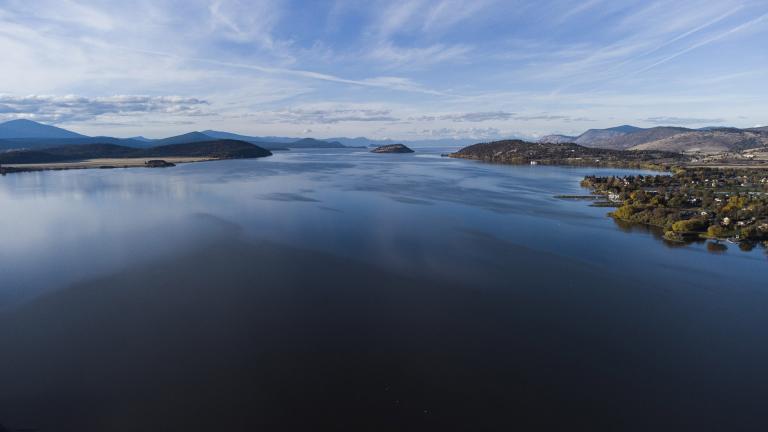
Picture the Klamath Basin in March, as the summer of 2050 looms on the horizon. It’s been a warm, dry winter. Only specks of white remain on the mountaintops, streams languish with no snowmelt to surge their riffles and forests and grasslands already thirst for moisture. What will the experience of drought in the basin feel like if we do nothing to change the way we manage it? And what could it look like if the watershed’s stakeholders right the ship?
Plucked from a slew of possible futures, below are two scenarios the Klamath and its communities could face by the mid-21st Century. Though fictional, they are based on the impacts associated with a specific degree of warming determined by climate and economic modelers. Representative Concentration Pathways, or RCPs, are socioeconomic models that describe four different trajectories of carbon emissions, each resulting in a specific average temperature increase by the end of this century. Researchers can then use those trajectories to model the behavior of the atmosphere, assessing future impacts like extreme heat, fire danger, snowfall and more.
Both of these scenarios exist within RCP 4.5, which projects a global average temperature increase of about 3.24˚F by the end of this century relative to the period between 1986 and 2005 (for comparison, the Klamath Basin has already warmed by about 1˚F since the mid-20th century). For this to occur, global carbon emissions must peak by around 2040 and decline rapidly over the following 30 years to half of what they were in 2000.
Climate modelers consider RCP 4.5 a middle-of-the-road pathway. It emits more carbon and results in worse impacts than the best-case-scenario model that has become the goal for the 2015 Paris Agreement, but it’s not as catastrophic (or even as unlikely) as RCP 8.5, the worst-case pathway that more than doubles the increase in global temperatures by 2100.
For that to occur, humans would have to continue increasing fossil fuel use and emissions, despite market forces driving down the price of renewable energy even in the absence of robust climate policies.
In the Klamath Basin, future impacts based on RCP 4.5 and 8.5 only differ toward the end of this century, with the latter being more intense. For the purposes of imagining the Klamath Basin in 2050, both scenarios result in roughly the same outcome because previous emissions will have already locked in a certain level of warming by then.
In both of these futures, the annual average temperature of the basin will be 51.9˚F, nearly 4˚ warmer than it was in 2000. Each summer, the atmosphere will draw nearly an inch more water from plants than it used to, requiring that much more precipitation to replace it. Soils are 7% drier, and three fewer inches on average of snow-water equivalent are available to make it into streams and lakes by April 1. The average number of “extreme” fire danger days has increased by five each fire season because wildlands have become so parched.
But this isn’t a doomsday scenario — or at least it doesn’t have to be. The sparsely populated Klamath Basin can’t single-handedly reverse global emissions trends, but it can control how it responds to their related impacts. Though the first future described in “The Lone Farmer” could be considered the “bad” future, while the second described in “Lodgepole and Ponderosa” could be considered “good,” neither is any more likely than the other, and neither is set in stone.
Blockage: How politics, economics and other human forces obstruct a sustainable Klamath Basin
Blockage: How politics, economics and other human forces obstruct a sustain...

This story by ESI Journalism Fellow Alex Schwartz was originally published as part of the Project Klamath interactive website by the Herald & News, where it appears with additional photos and resources.
___________
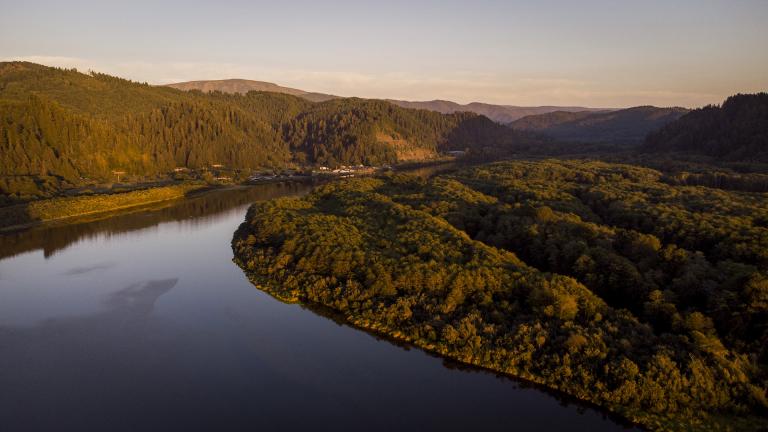
On November 5, 1922, in the volcanic scrublands just south of the Oregon-California border, a group of people gathered on a hill above the Klamath River to celebrate a newly minted, 126-foot wall of concrete.
A local band played “America the Beautiful” and the American flag unfurled from a flagpole on the dam. Soldiers fired a salute from atop the mountain. The attendees had a picnic and local officials made speeches praising the utility bringing large-scale hydroelectric power generation to the area. At the time, the Siskiyou Daily News called the project “one of the largest hydroelectric power plants in the world,” able to produce 12,500 kilowatts of energy.
At the end of the event, the daughter of the California Oregon Power Company’s board chairman flipped a switch, turning the generator on and feeding the power of the Klamath River into the regional grid. Copco Dam was officially in operation.
The newspaper paraphrased a Yreka judge who told a romantic story of development in the region, of how white American settlement had progressed the area by leaps and bounds. Horses had been upgraded to oxen and then to cars in a matter of decades. And thanks to the booming development of hydropower, the sky would be the limit.
“It is but a matter of a few years until we will be coming to the Copco picnics and future dedicatory ceremonies flying through the air,” the article read.
But one community’s progress was another’s decline. The dam almost perfectly bisected the Klamath Basin, and due to its height, it wasn’t feasible to construct fish passage infrastructure at the dam. Salmon lost access to hundreds of miles of spawning habitat in the tributaries to Upper Klamath Lake.
A June 1921 article in the Klamath Evening Herald had pointed out that the watershed was at a crossroads. Would it become a major hydropower-producing stream or California’s salmon stronghold?
“Along with it is the problem (of) whether the need for electricity ranks higher in the law than a food supply for the Indians,” the article read.
Fast forward 100 years, and the Klamath is known for neither an abundance of hydropower nor an abundance of salmon.
Heal the People, Heal the Land: Righting environmental and historical wrongs in the Klamath Basin
Heal the People, Heal the Land: Righting environmental and historical wrong...

This story by ESI Journalism Fellow Alex Schwartz was originally published as part of the Project Klamath interactive website by the Herald & News, where it appears with additional photos and resources.
__________
Most people in the Klamath Basin agree that restoring streams, wetlands and forests is a more effective way to revive species and communities than fighting over a dwindling water supply.
Re-empowering nature to store and filter water doesn’t often require anyone to give up their share of it.
But first, stakeholders must meaningfully address the basin’s uncomfortable history and reconcile two cultures that seem at odds with each other. Until farmers, ranchers and tribal members can agree on how to do that, many say there’s little hope for eliminating the physical chokepoints that harm the watershed.
In August 2021, the Klamath Falls Equity Task Force presented recommendations to city council on how to promote equity in the area. One of the first items was recognizing the role of racism in the Klamath Basin water crisis.
“Our water crisis still exists, in part, due to racism against the Tribes and that racism against the Tribes still exists, in part, due to our water crisis,” wrote the task force.
At the city council meeting where the task force made its recommendations, several Klamath tribal members made public comments about how they’ve experienced anti-Indigenous behavior in the basin.
“There are communities worldwide that deal with drought, but this is one of the only communities where drought is really just focused around racism and blaming the Tribes for what’s going on, when really what we’ve been doing is rearranging the chairs on the Titanic,” said Klamath tribal council member Willa Powless. The city has since disbanded the equity task force and has not carried out its recommendations related to the Klamath Basin water crisis.
Fish and Chips: The future of agriculture in the Klamath Basin

This story by ESI Journalism Fellow Alex Schwartz was originally published as part of the Project Klamath interactive website by the Herald & News, where it appears with additional photos and resources.
___________
It had been three years since Brook Thompson caught a salmon.
Growing up on the Yurok Reservation in Klamath, Calif., she used to eat it year-round — canned, smoked, boiled, pattied — benefitting from Chinook salmon’s exceptionally high protein and omega-3 fatty acid content. But the rest of Thompson’s diet consisted of flour, sugar, pasta and the occasional canned fruit or vegetable, all provided by the federal government. There was (and still is) no grocery store in Klamath. The only fresh food comes from the river.
“I didn’t get a lot of good food growing up,” said Thompson, who has Yurok and Karuk ancestry. Doctors even considered her malnourished until she moved to Portland for college. Now in a graduate environmental engineering program at Stanford University, she has access to healthier foods and grocery stores and is able to eat a balanced diet.
But Thompson said Whole Foods salmon can’t nourish her like the river can. The spiritual practice of catching a salmon near the mouth of the Klamath, cleaning it and putting it on ice can’t be replicated over a fish counter. To her, the fish just taste better at home.
“Our culture is really energy-based,” Thompson said. “You want to put that good spirit and energy into your food, and you feel that when you eat it. You put that back into yourself. Salmon tastes so bad everywhere else. I don’t know how people like it.”
Beyond nourishing its people, the salmon run can also nourish the economy of the Yurok Reservation, which has a median income of about $11,000. Thompson said a good commercial fishery could allow some tribal members to buy Christmas presents for their relatives, school supplies for their kids and even gas for their cars to be able to get to the nearest grocery store half an hour away in Crescent City.
Recently, the Yurok commercial fishery processing building at the foot of Requa Hill, along the Klamath’s estuary, has sat empty more often than not. For decades, and especially since 2015, the Klamath River fishery has been in sharp decline.
Between 2016 and 2020, the annual harvest of fall Chinook salmon has averaged fewer than 5,000 for a tribe that has more than 6,000 members. Between 1989 and 2015, tribal members had caught an average of nearly 24,000 fish a year.
“The fish are kind of the canary in the coal mine. Salmon are telling us that things aren’t working,” said Barry McCovey, the Yurok Tribe’s fisheries director and a Yurok tribal member. “Things haven’t been good for a long time — the system has been disconnected and thrown out of balance for generations — but things have gotten worse exponentially.”
Get Close
Dear you, I’m reading these words aloud as I type them. Words carrying sounds on their backs are my path to you and I’m trying to close the gap between us. Because at root, whether through words, sounds or images, it’s the connection I’m after. In the audio industry we often talk about intimacy and […]
Unexpected hope for millions as bleached coral reefs continue to supply nutritious seafood
Air pollution from wildfires, rising heat affected 68% of US West in one day
Nearly 2 million children worldwide develop asthma as a result of breathing in traffic- related pollution
Dairy farmers can adapt to climate change
Deforestation increases risk of flash flooding in fast-growing West African coastal cities
Climate change could lead to power outages, higher power costs on west coast of US
Study reveals more hostile conditions on Earth as life evolved
Mass die-off of Magellanic penguins seen during 2019 heat wave
Climate change, invasive species drive native trout declines
So You Want To Start A Podcast, Eh?
Download a transcript of this episode here. Last I heard, there are two million podcasts — two million! On one hand, that’s amazing. So many people picking up microphones and saying what they want to say. Frankly, I think that’s healthy for the democracy. On the other hand, yeesh! That’s a helluvalot of podcasts. And, […]
The post So You Want To Start A Podcast, Eh? appeared first on Transom.
Predator interactions chiefly determine where Prochlorococcus thrive
Africa’s ‘Great Green Wall’ could have far-reaching climate effects
Africa’s “Great Green Wall” initiative is a proposed 8,000-kilometer line of trees meant to hold back the Sahara from expanding southward. New climate simulations looking to both the region’s past and future suggest this greening could have a profound effect on the climate of northern Africa, and even beyond.
By 2030, the project aims to plant 100 million hectares of trees along the Sahel, the semiarid zone lining the desert’s southern edge. That completed tree line could as much as double rainfall within the Sahel and would also decrease average summer temperatures throughout much of northern Africa and into the Mediterranean, according to the simulations, presented December 14 during the American Geophysical Union’s fall meeting. But, the study found, temperatures in the hottest parts of the desert would become even hotter.
Previous studies have shown that a “green Sahara” is linked to changes in the intensity and location of the West African monsoon. That major wind system blows hot, dry air southwestward across northern Africa during the cooler months and brings slightly wetter conditions northeastward during the hotter months.
Such changes in the monsoon’s intensity as well as its northward or southward extent led to a green Sahara period that lasted from about 11,000 to 5,000 years ago, for example (SN: 1/18/17). Some of the strongest early evidence for that greener Sahara of the past came in the 1930s, when Hungarian explorer László Almásy — the basis for the protagonist of the 1996 movie The English Patient — discovered Neolithic cave and rock art in the Libyan Desert that depicted people swimming.
Past changes in the West African monsoon are linked to cyclical variations in Earth’s orbit, which alters how much incoming solar radiation heats up the region. But orbital cycles don’t tell the whole story, says Francesco Pausata, a climate dynamicist at the Université du Québec à Montréal who ran the new simulations. Scientists now recognize that changes in plant cover and overall dustiness can dramatically intensify those monsoon shifts, he says.
More vegetation “helps create a local pool of moisture,” with more water cycling from soil to atmosphere, increasing humidity and therefore rainfall, says Deepak Chandan, a paleoclimatologist at the University of Toronto who was not involved in the work. Plants also make for a darker land surface compared with blinding desert sands, so that the ground absorbs more heat, Chandan says. What’s more, vegetation reduces how much dust is in the atmosphere. Dust particles can reflect sunlight back to space, so less dust means more solar radiation can reach the land. Add it all up, and these effects lead to more heat and more humidity over the land relative to the ocean, creating a larger difference in atmospheric pressure. And that means stronger, more intense monsoon winds will blow.
The idea for Africa’s Great Green Wall came in the 1970s and ’80s, when the once-fertile Sahel began to turn barren and dry as a result of changing climate and land use. Planting a protective wall of vegetation to hold back an expanding desert is a long-standing scheme. In the 1930s, President Franklin Roosevelt mobilized the U.S. Forest Service and the Works Progress Administration to plant walls of trees from the Great Plains to Texas to slow the growth of the Dust Bowl. Since the 1970s, China has engaged in its own massive desert vegetation project — also nicknamed the Great Green Wall — in an attempt to halt the southward march of sand dunes from the Gobi Desert (SN: 7/9/21).
Led by the African Union, Africa’s Great Green Wall project launched in 2007 and is now roughly 15 percent complete. Proponents hope the completed tree line, which will extend from Senegal to Djibouti, will not only hold back the desert from expanding southward, but also bring improved food security and millions of jobs to the region.
What effect the finished greening might ultimately have on the local, regional and global climate has been little studied — and it needs to be, Pausata says. The initiative is, essentially, a geoengineering project, he says, and when people want to do any type of geoengineering, they should study these possible impacts.
To investigate those possible impacts, Pausata created high-resolution computer simulations of future global warming, both with and without a simulated wall of plants along the Sahel. Against the backdrop of global warming, the Great Green Wall would decrease average summertime temperatures in most of the Sahel by as much as 1.5 degrees Celsius.
But the Sahel’s hottest areas would get even hotter, with average temperatures increasing by as much as 1.5 degrees C. The greening would also increase rainfall across the entire region, even doubling it in some places, the research suggests.
These results are preliminary, Pausata says, and the data presented at the meeting were only for a high-emissions future warming scenario called RCP8.5 that may not end up matching reality (SN: 1/7/20). Simulations for moderate- and lower-emissions scenarios are ongoing.
The effects of greening the Sahara might extend far beyond the region, the simulations suggest. A stronger West African monsoon could shift larger atmospheric circulation patterns westward, influencing other climate patterns such as the El Niño Southern Oscillation and altering the tracks of tropical cyclones.
Chandan agrees that it’s important to understand just what impact such large-scale planting might have and notes that improvements in understanding what led to past changes in the Sahara are key to simulating its future. That the Great Green Wall’s impact could be far-ranging also makes sense, he says: “The climate system is full of interactions.”
How sea level rise is affecting your commute to and around Atlantic City
By John Upton (Climate Central) and Joe Martucci (Press of Atlantic City)
ATLANTIC CITY — Like many of the 21,735 casino workers in New Jersey, Mike Luko’s ability to get to and from work can be affected by the direction of the moon, the phase of the moon and what storms are nearby, all of which affect coastal flooding.
“Sometimes it’s a hassle, they end up detouring you at Route 9, or they close the road,” said Luko, of Egg Harbor City. Luko takes the White Horse Pike to get to his job as a carpenter for Bally’s Atlantic City, unless the spilled over bays get in the way.
|
This story was produced through a partnership between The Press of Atlantic City and Climate Central. |
On average, it’ll happen two dozen times a year. According to the Union of Concerned Scientists, that’s how many times the tide gauge at Steel Pier in Atlantic City detects tidal flooding, roughly six times more annually than in the 1950s and 1960s.
It’s not just commuters who contend with the tidal flooding on the roads. Tens of millions of tourists travel to Atlantic City each year.
“We’re a driving market, we’re a large driving destination,” said Michael Chait, president of the Greater Atlantic City Chamber. “It’s two factors, it’s getting home and working.”
Chait described the Black Horse Pike as a “perfect example” of an important road where operations are disrupted by floodwaters.
“When you look at roadways and the infrastructures that currently exist, there are enormous issues. … That also carries into our tourism,” Chait said.
While the roads in and around Atlantic City have been affected by tidal flooding throughout the city’s history, the frequency of flooding is on the rise because of the 1.5 feet of local sea level rise that has occurred since 1911, according to the National Oceanic and Atmospheric Administration. Exacerbating the flooding is the sinking of land, or subsidence, along the mid-Atlantic coastline.
Those who frequent the city accept the flooding as a way of life. But for each foot in sea level rise, it will cost exponentially more to deal with it.
The impacts from sea level rise affect almost every facet of life here, from the economy to the culture and physical landscape. To better understand how the sea continues to shape the resort, The Press of Atlantic City and Climate Central are examining the challenges, strategies and opportunities as the city deals with increasing flood risks.
Schools and local restaurants are being forced to cope with increasingly frequent flooding, forcing workers and parents to trod through floodwaters and in some cases miss shifts. Homeowners, particularly those in the back bay neighborhoods, face heavy financial burdens from flooding, whether it’s repairing them after storms or paying more for flood insurance.
For emergency managers, it’s the flooding of roadways that poses “huge problems,” said Kimberly McKenna of the Stockton University Coastal Research Center, which researches and works with local governments and state agencies to monitor and manage intensifying flooding.
“For emergency safety and stuff, it’s probably number one on the list,” McKenna said.
AtlantiCare Regional Medical Center’s Mainland and City campuses work with local emergency managers and responders to “ensure safe transportation of patients” during flooding from severe weather, official James Kilmer Jr. said.
Other businesses in Atlantic City catering to tourists also suffer.
Frank Becktel is a jitney driver, part of Atlantic City’s minibus service that has moved people around the city since 1915. He lives in what he describes as the lowest point in Atlantic City, near Gardner’s Basin. It floods so often on his street, the bottom of the fire hydrant near him is rusted from years of saltwater intrusion.

A Jitney drives through flooded streets during major coastal flooding Feb. 1.
It’s also part of Becktel’s livelihood to help his riders navigate floods.
“We’re owner-operators, we don’t have the luxury of stopping when the water’s too high. We only get paid by the people that we pick up. If they’re standing in the flood waters, we have to get them,” he said.
Becktel said his riders often go to great lengths not to miss work or an appointment.
“They try to walk to places where it’s drier, they stand on high points on the road. If they catch a jitney, they know how to get to the high points, they wear boots and get on the jitney as quickly as possible,” he said.
Both the jitney drivers and the passengers who need to move around the city are in tune with the weather and flooding conditions.
“What time it’s going to flood, what time it’s receding, etc. … We all always discuss this,” Becktel said.
From 1993 to 2017, sea levels in New Jersey rose an average of 1.9 inches per decade, according to a Rutgers University Science and Technology panel. Of that 1.9-inch growth, nine-tenths of an inch comes from natural processes, such as sinking land. A warming world, driven by man-made greenhouse gas emissions, accounts for 0.87 inches, while 0.2 inches of the rise is due to unknown factors. The rate of sea-level rise is increasing globally, and it will continue to affect Atlantic City at a quickening pace.
By 2050, there is a 50% confidence level of sea levels rising 1.4 feet above the 2010 average, regardless of emissions outcome, according to the most recent Rutgers Science and Technical Advisory Panel.
Robert Noland, a professor at the Edward J. Bloustein School of Planning and Public Policy at Rutgers, worked with a Rutgers colleague and Climate Central’s sea level scientists to investigate how rising seas could affect workers in Atlantic and Cape May counties.
The research combined localized sea level projections with information about road networks to identify where travel would be blocked by coastal flooding, and how many workers that would cut off from their jobs. This information was combined with a “gravity model,” a planning tool that provides a measure of access based on travel time to job locations.
The paper, published two years ago, warned that increasing sea levels will have “large impacts on people and the economy, and large populations will have access to employment disrupted well before their own properties or places of employment may begin to flood.”
While most climate impacts are felt far more acutely by low-income communities than wealthy ones, Noland said that “in this case, because there are a lot of wealthy households along the shore, they were getting hit hard” as well in the research findings.
And while coastal flooding is widely perceived to be a coastal issue, Noland warned that inland roads also flood throughout the area and that the research showed these closures would increasingly affect workers.
A “big limitation” of the research was that it approximated where residents’ jobs were located, Noland said, but it helps to demonstrate the skyrocketing impacts as seas continue to rise. The researchers developed a measure of job accessibility and looked at how it would be reduced throughout the two-county area as water levels continue to rise.
In Gardner’s Basin, job accessibility falls by more than four-fifths with one foot of sea level rise, according to Noland’s research. In Atlantic City’s Chelsea Heights neighborhood, job accessibility falls more than three-fifths. Six feet of sea-level rise, which is theoretically possible this century, would virtually eliminate job accessibility in the area.

Percent reduction in the accessibility index by block-group for different levels of water height for Atlantic and Cape May counties. Atlantic City would see a 63, 64, 67, and 99 percent drop for one, two, three and six feet of sea level rise, respectfully.
Noland’s projections assume that roadways and other infrastructure remain unchanged through the coming decades. Efforts to protect them from flooding will reduce the impacts, and the state and local governments have myriad projects planned or underway to protect traffic from worsening hazards.
Like other state agencies, the New Jersey Department of Transportation has assembled a working group to help plan for extreme weather. The group is “developing recommendations that will be incorporated in our project designs and infrastructure maintenance practices” to protect the state’s roadways from effects of climate change, spokesperson Jim Barry said.
Some 4,175 casino employees live in mainland communities where Route 30 offers the most direct access to Atlantic City. More frequent flooding would mean they would have to pay a toll and ride the Atlantic City Expressway, something commuters such as Luko would rather not do.
For him and for Becktel, who has grown accustomed to his rusting fire hydrant, solutions to sea level rise — both long- and short-term — can’t come soon enough.

Noland
Goodbye 2021
TRANSOM: “TRAN-sum” A small hinged window above a door, allowing light and ventilation into hallways of older buildings. At magazine and newspaper offices, unsolicited manuscripts were submitted “over the transom.” A YEAR-END RETROSPECTIVE 2021 marked Transom’s 20th anniversary. And anniversaries have a way of encouraging us to pause and reflect. To think about what’s been […]
The post Goodbye 2021 appeared first on Transom.
Safer carbon capture and storage
Controlled burning of natural environments could help offset our carbon emissions
Iodine in desert dust destroys ozone
From the oilfield to the lab: How a special microbe turns oil into gases
Remote areas are not safe havens for biodiversity, research shows
Melting of the Antarctic ice sheet could cause multi-meter rise in sea levels by the end of the millennium
How electric vehicles offered hope as climate challenges grew
This was another year of bleak climate news. Record heat waves baked the Pacific Northwest. Wildfires raged in California, Oregon, Washington and neighboring states. Tropical cyclones rapidly intensified in the Pacific Ocean. And devastating flash floods inundated Western Europe and China. Human-caused climate change is sending the world hurtling down a road to more extreme weather events, and we’re running out of time to pump the brakes, the Intergovernmental Panel on Climate Change warned in August (SN: 9/11/21, p. 8).
The world needs to dramatically reduce its greenhouse gas emissions, and fast, if there’s any hope of preventing worse and more frequent extreme weather events. That means shifting to renewable sources of energy — and, importantly, decarbonizing transportation, a sector that is now responsible for about a quarter of the world’s carbon dioxide emissions.
But the path to that cleaner future is daunting, clogged with political and societal roadblocks, as well as scientific obstacles. Perhaps that’s one reason why the electric vehicle — already on the road, already navigating many of these roadblocks — swerved so dramatically into the climate solutions spotlight in 2021.
Just a few years ago, many automakers thought electric vehicles, or EVs, might be a passing fad, says Gil Tal, director of the Plug-in Hybrid & Electric Vehicle Research Center at the University of California, Davis. “It’s now clear to everyone that [EVs are] here to stay.”
Globally, EV sales surged in the first half of 2021, increasing by 160 percent compared with the previous year. Even in 2020 — when most car sales were down due to the COVID-19 pandemic — EV sales were up 46 percent relative to 2019. Meanwhile, automakers from General Motors to Volkswagen to Nissan have outlined plans to launch new EV models over the next decade: GM pledged to go all-electric by 2035, Honda by 2040. Ford introduced electric versions of its iconic Mustang and F-150 pickup truck.
Consumer demand for EVs isn’t actually driving the surge in sales, Tal says. The real engine is a change in supply due to government policies pushing automakers to boost their EV production. The European Union’s toughened CO2 emissions laws for the auto industry went into effect in 2021, and automakers have already bumped up new EV production in the region. China mandated in 2020 that EVs make up 40 percent of new car sales by 2030. Costa Rica has set official phase-out targets for internal combustion engines.
In the United States, where transportation has officially supplanted power generation as the top greenhouse gas–emitting sector, President Joe Biden’s administration set a goal this year of having 50 percent of new U.S. vehicle sales be electric — both plug-in hybrid and all-electric — by 2030. That’s a steep rise over EVs’ roughly 2.5 percent share of new cars sold in the United States today. In September, California announced that by 2035 all new cars and passenger trucks sold in the state must be zero-emission.
There are concrete signs that automakers are truly committing to EVs. In September, Ford announced plans to build two new complexes in Tennessee and Kentucky to produce electric trucks and batteries. Climate change–related energy crises, such as the February failure of Texas’ power system, may also boost interest in EVs, Ford CEO Jim Farley said September 28 on the podcast Columbia Energy Exchange.
“We’re seeing more extreme weather events with global warming, and so people are looking at these vehicles not just for propulsion but for … other benefits,” Farley said. “One of the most popular features of the F-150 Lightning is the fact that you can power your house for three days” with the truck’s battery.
More to navigate
Although the EV market is growing fast, it’s still not fast enough to meet the Paris Agreement goals, the International Energy Agency reported this year. For the world to reach net-zero emissions by 2050 — when carbon emissions added to the atmosphere are balanced by carbon removal — EVs would need to climb from the current 5 percent of global car sales to 60 percent by 2030, the agency found.
As for the United States, even if the Biden administration’s plan for EVs comes to fruition, the country’s transportation sector will still fall short of its emissions targets, researchers reported in 2020 in Nature Climate Change. To hit those targets, electric cars would need to make up 90 percent of new U.S. car sales by 2050 — or people would need to drive a lot less.
And to truly supplant fossil fuel vehicles, electric options need to meet several benchmarks. Prices for new and used EVs must come down. Charging stations must be available and affordable to all, including people who don’t live in homes where they can plug in. And battery ranges must be extended. Average ranges have been improving. Just five or so years ago, cars needed a recharge after about 100 miles; today the average is about 250 miles, roughly the distance from Washington, D.C., to New York City. But limited ranges and too few charging stations remain a sticking point.
Today’s batteries also require metals that are scarce, difficult to access or produced in mining operations rife with serious human rights issues. Although there, too, solutions may be on the horizon, including finding ways to recycle batteries to alleviate materials shortages (SN: 12/4/21, p. 4).
EVs on their own are nowhere near enough to forestall the worst effects of climate change. But it won’t be possible to slow global warming without them.
And in a year with a lot of grim climate news — both devastating extreme events and maddeningly stalled political action — EVs offered one glimmer of hope.
“We have the technology. It’s not dependent on some technology that’s not developed yet,” Tal says. “The hope is that now we are way more willing to [transition to EVs] than at any time before.”
Study finds electric vehicles provide lower carbon emissions through additional channels
Arctic birds connect the world: Biologging tech tracking of nearctic seabirds surprise scientists with diverse migratory paths from shared breeding site
Exquisitely Challenging: Reporting on Suicide
Erica Heilman’s story “Finn and the Bell” is the best I’ve heard all year. Yes. It’s that good. The documentary tells the story of Finn Rooney, a young man who was a volunteer fireman and a poet and a baseball player and, as one friend put it, “a hipneck” — a perfect blend of hippy […]
The post Exquisitely Challenging: Reporting on Suicide appeared first on Transom.
Vikings may have fled Greenland to escape rising seas
In 1721, a Norwegian missionary set sail for Greenland in the hopes of converting the Viking descendants living there to Protestantism. When he arrived, the only traces he found of the Nordic society were ruins of settlements that had been abandoned 300 years earlier.
There is no written record to explain why the Vikings left or died out. But a new simulation of Greenland’s coastline reveals that as the ice sheet covering most of the island started to expand around that time, sea levels rose drastically, researchers report December 15 at the American Geophysical Union’s fall meeting in New Orleans.
These shifting coastlines would have inundated grazing areas and farmland, and could have helped bring about the end of the Nordic way of life in Greenland, says Marisa Borreggine, a geophysicist at Harvard University.
Greenland was first colonized by Vikings in 985 by a group of settlers in 14 ships led by Erik the Red, who had been banished from neighboring Iceland for manslaughter. Erik and his followers settled across southern Greenland, where they and their descendants hunted for seals, grazed livestock, built churches and traded walrus ivory with European mainlanders.
The settlers arrived during what’s known as the Medieval Warm Period, when conditions across Europe and Greenland were temperate for a handful of centuries (SN: 7/24/19). But by 1350, the climate had started taking a turn for the worse with the beginning of the Little Ice Age, a period of regional cooling that lasted well into the 19th century.
Researchers have long speculated that a rapidly changing climate could have dealt a blow to Greenland’s Norse society. The island probably became much colder in the last 100 years of Norse occupation, says paleoclimatologist Boyang Zhao at Brown University in Providence, R.I, who was not involved in the new research. Lower temperatures could have made farming and raising livestock more difficult, he says.
These lower temperatures would have had another impact on Greenland: the steady expansion of the island’s ice sheet, Borreggine and colleagues say.
Though rising sea levels usually go hand in hand with ice melting from ice sheets, oceans do not rise and fall uniformly in every place, Borreggine says. Around Greenland, sea level tends to rise when the ice sheet there grows.
This is for two main reasons: First, ice is heavy. The sheer weight of the ice sheet pushes the land it rests on down, meaning that as the ice sheet grows, more land is submerged. Second is gravity. Being massive, ice sheets exert some gravitational pull on nearby water. This makes the seawater around Greenland tilt upward toward the ice, meaning that water closer to the coast is higher than water in the open ocean. As the ice sheet grows, that pull becomes even stronger, and sea level close to the coast rises further.
Simulating the impact of the weight of the ice and its tug on Greenland’s waters, Borreggine and their colleagues found that sea level rose enough to flood the coast by hundreds of meters in some areas. Between the time the Vikings arrived and when they left, there was “pretty intense coastal flooding, such that certain pieces of land that were connected to each other were no longer connected,” they say.
Today, some Viking sites are being inundated as a result of the overall rise in global sea level from climate change, which is being only marginally offset around Greenland by its melting ice sheet. Something similar could have happened back in the 14th and 15th centuries, destroying land that the Norse relied on for farming and grazing, Borreggine says.
“Previous theories about why Vikings left have really focused on the idea that they all died because it got really cold, and they were too dumb to adapt,” Borreggine says. But they say that archaeological digs have revealed a far more nuanced story, showing that Greenland’s Norse people did change their lifestyle by increasingly relying on seafood in the last century of their occupation.
But learning to adapt may have been too difficult in the face of an increasingly harsh landscape. The idea that rising sea levels may have been one of these challenges has merit, Zhao says, noting that the reasons why the Vikings disappeared from Greenland is nuanced.
As the climate changed, for example, these people may have also found themselves increasingly cut off from trade routes as the season for thick sea ice extended. And by the mid-14th century, the Black Plague was tearing through Europe, cutting into the Vikings’ biggest market for walrus ivory.
“Norse people came and left,” Zhao says. “But there are still a lot of unsolved questions,” including why exactly they left, he says.
The last written record of this society is a letter describing a wedding in 1408. A few years later, that couple moved to Iceland and started farming. Why the pair chose to leave is lost to history, but, as the new research suggests, sea level rise may have been part of the equation.
‘A moral imperative’: Monastic sisters in rural Midwest make faith-based case for climate action
By Ayurella Horn-Muller (Climate Central). With reporting and news segment by Amber Strong (Newsy)

Massive bee hives can be found on the grounds of Mount St. Scholastica, a 158-year-old Benedictine monastery in Atchison, Kansas. Image Credit: Stephanie Sandoval/ Newsy
ATCHISON, KAN. — Nearly 100 sisters make up Mount St. Scholastica, a Benedictine monastery in a city of 10,000 in northwestern Kansas, where acres of rolling fields surround a chapel. Inside, sisters teach about the moral and spiritual call to live sustainably.
|
This is the third story in Faith for Earth. |
“Over the years, we really have been trying to reduce our carbon footprint, how we can be less dependent on fossil fuels,” said Elizabeth Carillo, a Benedictine sister at the monastery working towards a graduate degree in religion and ecology.
|
Through collaborations involving Climate Central, Southerly and Newsy, this three-part series led by reporters Ayurella Horn-Muller and Amber Strong investigates ways in which religious leaders and faith-based communities across the U.S. are responding to climate change. |
At Mount St. Scholastica, some like Carillo not only make the faith-based case for action in the face of worsening climate change, they live by what they advocate. A 150-kilowatt solar system helps power the site. The sisters reduce water usage, capture and use rainwater, and sow native plants to preserve biodiversity and feed pollinators.
The Benedictine sisters at Mount St. Scholastica are among the Catholic communities in the rural Midwest preaching and living by the principles of sustainability in the face of the climate crisis.
Faith-based institutions like these across the world are increasingly vocal in making religious cases for climate action by promoting environmental sustainability, deploying their own clean energy solutions and even advocating for climate-friendly legislation.
Theological ethicist and Kansas’ Saint Paul School of Theology associate professor Joshua Bartholomew says local faith leaders' mobilizing for climate-friendly policies could bring about regional political and social change. “I can tell that religion is a huge part of the culture here,” said Bartholomew, who is new to the Midwest.
(Newsy)
According to the Christian ethicist, religious groups in rural areas advocating for better climate policy and living sustainably, like the Benedictine sisters in Atchison, are “great examples” of the ways faith-based institutions can engage their communities with climate change.
“It would be a dream for this [to] become sort of a center in this area for sustainable living,” Carillo said, describing how she aims for the monastery to attract community members looking to learn how to live more sustainably.
Judith Sutera is another sister at Mount St. Scholastica thinking about combating climate change and the faith-based role in environmental action.
“I think water and drought is becoming much more of an issue in this part of the country,” said Sutera, explaining the ways people living in the Midwest are experiencing the effects of the climate crisis.
Rising temperatures, drier soils and increasing water scarcity are weighty consequences of the warming climate in a state where 40% of the economy is associated with agricultural production.
Climate change is starting to drive ranges of plants, insects and other animals northward and to higher altitudes, worsening risks of crop failures and yield declines.

The combination of increasing heat and humidity caused by pollution was recently projected by scientists at Columbia University to reduce yields of major crops by 5 percent globally during the second half of this century, with Kansas and adjacent states identified as global hotspots for impacts. Kansas corn and soybean yields could decline by 20% to 30% this century, an economic analysis of the projections shows, potentially costing some Midwestern counties more than $50 million annually.
Mount St. Scholastica’s grounds house a garden for organic vegetables, and a small apiary where some of the sisters act as beekeepers. The European insects are a crucial tool in agriculture; pollinating crops, increasing the amount harvested, and serving as the foundation of the $9 billion honey industry.
Climate change is among the threats to pollination by native species — a 2021 United States Department of Agriculture study found that warming temperatures and increased rain and snow are among some of the biggest contributors to the decline of wild bees.
To Sutera, the impacts of worsening climate change in the Midwest are clear, and the case for action is a spiritual responsibility to protect and preserve the world around us.
“If there is no planet, there will be no other right to life issues,” Sutera said. “I mean, that's pretty basic.”
Greenhouse gas pollution from fossil fuels and other industrial activities has driven temperatures up more than 2.1°F (1.1°C) globally so far, worsening storms, heat waves, wildfires, droughts and flooding. Scientists warn unchecked emissions are on track to drive global temperatures beyond the international goal of 2.7°F (1.5℃) within two decades.
Unless fossil fueled energy systems are urgently swapped out for renewables, temperature projections for 2100 show some of the strongest warming in the nation will be in the Midwest, heightening deluges, flooding, heat streaks and crop failures.
In Atchison, the sisters at the monastery have turned to pursuing better global, federal and local climate policies to try to ward off these threats. They're members of the Benedictine Coalition for Responsible Investment, a coalition that invests in public companies to drive changes by exercising shareholder rights.
Involvement in climate advocacy by faith-based communities could have powerful implications for curbing carbon emissions, according to Nadia Ahmad, an associate law professor at Barry University in Florida and visiting associate professor at Yale.
“We’ve seen historically that faith leaders have been at the forefront of social justice issues, whether it's immigrant justice, climate justice or even looking at racial equality,” Ahmad said.
In rural parts of Kansas, where a state legislature has historically avoided acknowledging human-induced climate change, let alone acting on it, and some policymakers continue to be misleadingly skeptical of the accuracy of climate science, the political sway of local religious leaders could have far-reaching ramifications.
Sister Carillo believes all religious people have a responsibility for “caring for creation,” or environmental stewardship as a means of “respecting God.”
“These are dire circumstances and so much of it is an emphasis on upholding the dignity of human life,” said Carillo. “It’s like, when the planet’s dying, how much more of a life issue is there?”

Sister Elaine Fisher maintains the hives at Mount St. Scholastica, which is part of the Midwestern monastery's efforts to live a life of sustainability. Image Credit: Stephanie Sandoval/ Newsy
The ethical component of the faith-based case for climate action is critical when considering who is most affected by rapidly warming temperatures and rising seas. Across the U.S., those that suffer the most from climate change’s impacts belong to Black, Indigenous and Latinx lower-income communities. In Kansas, more than a hundred thousand people of color live below the federal poverty line.
“Most of the individuals and nations that feel the disproportionate effect of climate change are the least responsible for this sort of social issue,” said Saint Paul’s Bartholomew. Bartholomew’s research focuses on the relationship between economic justice and racial equality, and he spends much of his time working with Black churches.
More than a quarter of Kansas’ population makeup frontline communities, living in polluted neighborhoods where collective wealth is low. These are the communities that are facing the greatest repercussions of the climate emergency.
A 2019 Climate Accountability Institute dataset identified 20 fossil fuel companies as predominant contributors to more than one-third of the world’s greenhouse gas emissions — a problem exacerbated by carbon-emitting corporations in industries like agriculture and construction.
Bartholomew says that exploitation can be explained by connections between white supremacy and environmental degradation.
“It’s the same enemy,” he said. “The enemy in the system of racism and white supremacy is the same enemy of environmental degradation. And that's basically human beings' domination of one another, and nature.”
As climate change’s fallout is being felt across every industry, every place and every walk of life, frontline communities are also being forced to rebuild in the wake of costly disasters, which have surged in frequency during the past forty years. Research investigating links between rising wealth inequality and rising disaster costs has found that these populations are left with little to no federal resources and financial support in the aftermath of increasingly frequent extreme weather events.
For Sister Carillo of the Benedictine monastery, living sustainably and advocating for climate action are important steps faith-based communities can take to help mitigate the severity of such impacts, while aiding the most vulnerable.
“It really is a moral imperative,” said Carillo. “That care for the Earth was integrally connected with uplifting the marginalized, and helping those who have not had access to power and resources, find their strength and regain that opportunity.”
How a warming climate may make winter tornadoes stronger
NEW ORLEANS — Warmer winters could make twisters more powerful.
Though tornadoes can occur in any season, the United States logs the greatest number of powerful twisters in the warmer months from March to July. Devastating winter tornadoes like the one that killed at least 88 people across Kentucky and four other states beginning on December 10 are less common.
But climate change could increase tornado intensity in cooler months by many orders of magnitude beyond what was previously expected, researchers report December 13 in a poster at the American Geophysical Union’s fall meeting.
Tornadoes typically form during thunderstorms when warm, humid airstreams get trapped beneath cooler, drier winds. As the fast-moving air currents move past each other, they create rotating vortices that can transform into vertical, spinning twisters (SN: 12/14/18). Many tornadoes are short-lived, sometimes lasting mere minutes and with a width of only 100 yards, says Jeff Trapp, an atmospheric scientist at the University of Illinois at Urbana-Champaign.
Over the last 20 years, tornado patterns have shifted so that these severe weather events occur later in the season and across a broader range in the United States than before, Trapp says (SN: 10/18/18). But scientists have struggled to pin down a direct link between the twister changes and human-caused climate change.
Unlike hurricanes and other severe storm systems, tornadoes happen at such a small scale that most global climate simulations don’t include the storms, says Kevin Reed, an atmospheric scientist at Stony Brook University in New York who was not involved in the new research.
To see how climate change may affect tornadoes, Trapp and colleagues started with atmospheric measurements of two historical tornadoes and simulated how those storm systems might play out in a warmer future.
The first historical tornado took place in the cool season on February 10, 2013, near Hattiesburg, Miss., and the second occurred in the warm season on May 20, 2013, in Moore, Okla. The researchers used a global warming simulation to predict how the twisters’ wind speeds, width and intensity could change in a series of alternative climate scenarios.
Both twisters would likely become more intense in futures affected by climate change, the team found. But the simulated winter storm was more than eightfold as powerful as its historical counterpart, in part due to a predicted 15 percent increase in wind speeds. Climate change is expected to increase the availability of warm, humid air systems during cooler months, providing an important ingredient for violent tempests.
“This is exactly what we saw on Friday night,” Trapp says. The unseasonably warm weather in the Midwest on the evening of December 10 and in the early morning of December 11 probably contributed to the devastation of the tornado that traveled hundreds of miles from Arkansas to Kentucky, he speculates.
Simulating how historical tornados could intensify in future climate scenarios is a “clever way” to address the knowledge gap around the effects of climate change on these severe weather systems, says Daniel Chavas, an atmospheric scientist at Purdue University in West Lafayette, Ind., who was not involved in the new research.
But Chavas notes that this research is only one piece of a larger puzzle as researchers investigate how tornados might impact communities in the future.
One drawback of this type of simulation is it often requires direct measurements from a historical event, Reed says. That limits its prediction power to re-creating documented tornadoes rather than broadly forecasting shifts in large-scale weather systems.
Though the team based its predictions on only two previous tornados, Trapp says he hopes that adding more historical twisters to the analysis could provide more data for policy makers as well as residents of communities that may have to bear the force of intensifying tornadoes.
As flooding amplifies along the East Coast, Buddhist and Jewish faith leaders join the climate fight
By Ayurella Horn-Muller (Climate Central). With reporting and news segment by Amber Strong (Newsy).

Just two hours north of New York city is the Chuang Yen Monastery, a serene site of Buddhist worship sheltered by more than 200 acres of dense woodland. Image Credit: Andrew Shafer/ Newsy
|
This is the second story in Faith for Earth. |
NEW YORK — Bhikkhu Bodhi has lived in a monastery in New York's lower Hudson River Valley for the past 14 years, where he’s witnessed firsthand the compounding effects of climate change. Intensifying storms particularly concern him.
“People are always responsive to the words of spiritual leaders,” said Bodhi, an American Theravada Buddhist and president of the Buddhist Association of the United States. “If we speak up more explicitly, directly, clearly about the climate crisis and about the impact that it's going to have on humanity, it really calls for a very determined, full-scale response.”
|
Through collaborations involving Climate Central, Southerly and Newsy, this three-part series led by reporters Ayurella Horn-Muller and Amber Strong investigates ways in which religious leaders and faith-based communities across the U.S. are responding to climate change. |
The monk, who has spent decades engaging the Buddhist community on climate change, is one of many religious leaders along the East Coast making the moral case for climate action.
Spanning many traditions and miles, these leaders and faith groups are advocating for local, federal and global policies advancing an equitable clean energy transition — putting forth spiritual arguments for mitigating climate change.
Conscious of his carbon footprint, Bodhi is a vegetarian who encourages others to consider cutting meat consumption to reduce personal emissions. He’s also the founder of Buddhist Global Relief, a charity that fights hunger by teaching communities how to create sustainable food sources.
Buddhist Global Relief helps address a large contributor to carbon emissions — agriculture. The food system produces over a third of global emissions. In the U.S., agriculture is responsible for about 10% of emissions of heat-trapping greenhouse gases.
“What we found is one of the ways to both support farmers to emerge from poverty and to increase the yields of crops, while at the same time fighting climate change, is to support organic or ecologically sustainable types of agriculture,” said Bodhi.
(Newsy)
The Buddhist tradition focuses on the theory of causality, or the idea that there are actions behind every consequence. Bodhi blames unchecked carbon emissions on humanity’s prioritization of economic growth. “There’s a whole lattice, a whole network of environmental impacts due to reckless and unrestrained human activity.”
That harmful human activity was a key focus as world leaders, organizations and activists gathered in Glasgow in the fall for the 2021 United Nations Climate Change Conference, or COP 26. Among the faith leaders addressing COP 26 members, the Dalai Lama shared a message calling for cooperative and immediate action to confront ‘the urgent reality’ of climate change. He gave his first speech on climate change in 1990.
Preceding the COP summit in 2015, the Dalai Lama, Bhikkhu Bodhi and other Buddhist activists signed a statement on behalf of ‘over a billion Buddhists worldwide’, asking global leaders to prioritize mitigating climate change by aggressively curbing fossil fuel production, in the hopes of protecting those most impacted by the warming climate. ‘The Time to Act is Now: A Buddhist Declaration on Climate Change’ joined a consensus of religious calls to action, including the Rabbinic Letter on the Climate Crisis, the Islamic Declaration on Global Climate Change, and the Hindu Declaration on Climate Change.

At the Chuang Yen Monastery, American Theravada monk Bhikkhu Bodhi explains the Buddhist philosophy of causality and how that connects to human-induced climate change. Image Credit: Andrew Shafer/ Newsy
‘Religions have their problems, and their promise’
All traditional forms of religion share a common calling: a moral and ethical obligation to help those in need. Human rights to life, health, food and beyond are irrevocably threatened by climate change, which is why some say religious intervention is required.
“This is an ethical issue of the future, of the planet, of very vulnerable people,” said Yale University senior lecturer and researcher Mary Evelyn Tucker. “How could it not be moral?”
Tucker co-directs the Yale Forum on Religion and Ecology, a project which aims to mobilize climate action in all places of worship. She also authored and edited several books on the relationship between faith and environmental stewardship, with a focus on Confucian and Taoism.
“All of these [Eastern] religions have a very profound sense of the interdependence of life. All of this is one flow; from the heavens, to Earth, and to humans,” said Tucker. “So humans are co-creators, with the universe and Earth, as caring for these great systems of life.”
Faith leaders across all denominational boundaries have been increasingly coming together to do climate activism. While the trend is blossoming today, the seed was planted decades ago; religious authorities spoke out about the warming climate even before the Intergovernmental Panel on Climate Change was established in 1988. Ten years later, the nonprofit Interfaith Power and Light was established in the U.S. as a coalition of churches pursuing renewable energy, creating a model that would be adopted across 40 states.
Over the past decade, the number of global, national and local faith groups joining the climate movement has grown to include a robust range of religions calling for policy solutions to address climate change. They’re not just spreading awareness, either. A 2021 Nature article identified that one-third of the institutions that have pledged to divest almost $40 trillion from fossil fuel companies are faith-based organizations.
There’s still a long way to go, especially in the U.S., where religious attitudes towards science are more politicized and antagonistic than in other countries. Examples of this modern faith-fueled mistrust of climate science include groups like The Cornwall Alliance, a Tennessee-based evangelical nonprofit opposed to religious environmentalism and action against climate change.
“Religions have their problems, and their promise,” Tucker said, explaining that a lack of education about climate change, as well as who belongs to a parish, can sometimes stop local faith leaders from addressing climate change on the pulpit. Local faith leaders may also shy away from talking about climate change because of American political polarization.

People flock from all over the world to see the monastery’s centerpiece: a 37-foot marble statue of Buddha, the largest indoor Buddha statue in the Western Hemisphere. Image Credit: Andrew Shafer/ Newsy
“It's not always easy for these ministers to do it, because sometimes the interests of their congregation could be with a fossil fuel company,” Tucker said. “So, unfortunately, for some people in the pews, it may not be as clear.”
Who is sitting in American halls of worship is changing, too. Less than half of 10,000 young adults in the U.S. surveyed in a 2021 report think that faith communities are concerned with climate change. Nearly half of those respondents also said they don’t turn to faith communities due to a ‘lack of trust’ in the people, beliefs and systems of organized religion.
The number of U.S. adults overall who no longer consider themselves to be part of any religious denomination or tradition has also risen in recent decades. A 2014 Pew Research study found 23 percent of the adult population didn’t identify with a religion, up from 16 percent in 2007. Another 2018 Pew survey found a steady decline in the number of American adults under the age of 40 who say they believe in God or a universal spirit.
A lecturer at Tufts University and former Harvard Law Visiting Fellow of The Program on Law and Society in the Muslim World, Erum Sattar says this disconnect is because organized religions are failing to reach younger generations.
“They're not growing, and the pews are empty, people don't come, or maybe people are feeling disconnected from what this tradition has to tell them about the world they inhabit,” Sattar said.
Sattar sees faith communities engaging in climate action as a bridge to repair that divide. “I think it could be a real way to also revive and reinvigorate these traditions that, in a formal way, are losing sort of practical resonance.”
‘A risk we were willing to take’
Along the East Coast, climate change is hammering communities with intensified storms, higher tides and worsening heat. Compared to the first half of the 20th century, the Northeast has been seeing 50 percent more rainfall during its most severe storms.
In September, Hurricane Ida triggered extreme flooding across the Northeast, killing 46 people in New York, New Jersey, Pennsylvania and Connecticut. Many of the victims lived in illegal basement apartments in cities with high living costs. It was the region’s worst storm since 2012’s Sandy, which claimed 43 lives in New York City alone.

As the walls of Ida’s water subsided and grieving families buried their loved ones, what emerged from the wreckage were urgent calls for adaptation; as residents joined officials in rallying for preservation of infrastructure that wasn't built to withstand storms supercharged by climate change.
Rabbi Rachel Kahn-Troster thinks a key piece to that fortification lies in reducing emissions. The human rights activist and faith leader was one of three rabbis arrested in October for blocking the entrance of BlackRock, New York City’s largest financial firm, in a demonstration organized by the Jewish Youth Climate Movement. The protest aimed to pressure the firm to divest in companies that fund the fossil fuel industry.
She was there as a rabbi, but also as a mother, concerned for her children as they inherit a volatile future. “We knew that we were risking arrest by blocking the entrance to the building,” said Kahn-Troster. “That was a risk we were willing to take to get the message across.”
Kahn-Troster serves as the Executive Vice President of the Interfaith Center on Corporate Responsibility (ICCR) — a faith-based organization that lobbies major U.S. companies to reduce their contributions to emissions.
Her father was a Jewish climate change activist, so Kahn-Troster grew up learning about a fundamental religious obligation: caring for others and the world in which they live.
“We are caretaking the world as our obligation to other people. We know we only have one planet, and we all live on it,” said Kahn-Troster. “And we should all have the right to enjoy living here, sustainably. I think that message is very clear to me from my tradition.”
To the rabbi, that obligation extends beyond responsibility for environmental preservation and sustainable living, but also includes advocating for curbing emissions, expanding clean energy solutions and investing in sustainable agriculture, among other climate solutions.
“As faith communities, we have something to say to structures of power, right?,” said Kahn-Troster. “Especially in the United States, faith is part of a political conversation.”
If it takes getting arrested for companies to stop exploiting the world’s oil, gas and coal reserves, the rabbi is willing to make that sacrifice. She isn’t just preaching to one congregation, but protesting on behalf of all of them.
“Our political leaders are motivated when they hear from faith leaders,” she said. “That's an important piece of our role.”
{related}
‘Preach now or mourn in the future’: How Key West faith leaders are confronting climate change
By Ayurella Horn-Muller (Climate Central). With news segment by Amber Strong (Newsy)

St. Paul’s Episcopal Key West, which is trying to spur climate action among its congregation. (Photo by Ayurella Horn-Muller)
KEY WEST, FLA—Grounds cloaked in greenery weave around a towering ivory chapel in the heart of downtown Key West, Fla. Founded in 1832, St. Paul’s Episcopal Key West is not only the oldest Christian congregation in the area, but one of the oldest congregations of any religious tradition south of St. Augustine.
|
This is the first story in Faith for Earth. |
The church is on its fourth building, the first three lost to fires and a hurricane. After nearly two hundred years of its congregation working to keep it standing, Reverend Donna Mote, the newest rector at St. Paul’s, is now worried about a more subtle risk: rising seas.
|
Through collaborations involving Climate Central, Southerly and Newsy, this three-part series led by reporters Ayurella Horn-Muller and Amber Strong investigates ways in which religious leaders and faith-based communities across the U.S. are responding to climate change. |
“It would be a shame to preserve all these buildings, and then have people scuba diving in them in 100 years,” Mote said.
St. Paul’s is located on one of the highest points of Key West; one of the 1,700 islands that make up the Florida Keys, where 90% of the land mass sits only five feet above the Atlantic Ocean. While scuba divers won’t be visiting the church in the coming century, with seas rising and storms intensifying, the eight-square-mile island city is facing more frequent and chronic flooding.
Local officials and organizations are working to hold back the seawater climbing higher, threatening to plunge the area underwater by the turn of the century. But billion-dollar resilience projects in the pipeline—intended to raise roadways and floodproof infrastructure to combat flood risk—will depend on community buy-in.
Just five months into her role at St. Paul’s, Mote intends to roll out a renewable energy audit of the church site to see how they can use cleaner energy. She also tries to set a sustainable example for her parishioners: she’s on a plant-based diet and encourages them to bike instead of drive, when possible.
While St. Paul Episcopal Key West sits on land high enough to protect it from all but the worst storm surges, a Climate Central analysis found that by 2080, rising seas will introduce a 1% annual chance of coastal flooding to the church’s property. That creates a one-in-four chance of a flood impacting the site every 30 years—a hazard so severe only 3% of the U.S. population currently lives in areas subject to this kind of risk.
Mote belongs to one of several faith-based communities in Florida turning their attention to climate action, making religious cases for environmental preservation, clean energy and emissions reductions. At St. Gregory’s Episcopal Church in Boca Raton, parish members lead beach clean-ups. The First Presbyterian Church of Tallahassee donates to the city’s sustainability carbon fund as they seek to reduce their carbon footprint to net zero. The First Baptist Church of Orlando has been recognized by the U.S. Environmental Protection Agency for reducing pollution through energy efficiency.
Experts and faith leaders say provincial places of worship have a leading role to play in facilitating that support, and helping people engage in local environmental and justice issues. “We can either preach now to help people realize this,” said Ryan Gladwin, Palm Beach Atlantic University associate professor of ministry and theology. “Or we’re just going to have to be mourning with them, in the future, what we’ve lost.”
(Newsy)
Key West is home to more than 24,000 permanent residents and attracts millions of tourists each year. Cobblestone walkways line tourist-saturated storefronts, adjacent to a sprawling, weathered dock overlooking the ocean. It’s picturesque until it starts to pour. Many locals are quick to name two converging streets downtown—Front and Greene—as frequent flood zones. In the lowest-lying parts of the longest island in the archipelago, heavy rainfall and high tides cause streets to flood, damage homes, and submerge vehicles. Monroe County expects another 17-inches of sea level rise by 2040.
“The flooding has definitely been more than I’ve ever seen,” said Stephanie Piraino, manager at the Key West Key Lime Company, just a two-minute walk from the waterfront. Piraino said heavy rains can be brutal on the older properties and high tides often mean she’s taking her shoes off before wading through ankle-deep water in the parking lot.
Hurricane Irma swept through in 2017, the force of the Category 4 storm surge strong enough to flip the store’s giant hundred-pound freezers upside-down. “We had everything covered. We put tarps in front of everything, did the sandbags with wood next to the door, but there’s really no way around it,” she said. Up to a foot of seawater came in.
After Irma made landfall, Piraino remembers how a handful of local churches supplied donations to those in need. “Bug spray and charcoal saved the week for me and my kids,” she said.
She used to live in a trailer in the nearby community of Stock Island, where dealing with chronic flooding was just a part of life. “Every time there was a high tide, the water would flood so much that it would come all the way to my front porch,” she said. She’d often struggle with electrical outages because of seawater submerging parts of her mobile home.
With an average housing market value of just over $700,000, Key West is one of the most expensive cities to live in Florida. Workers need to earn $33 an hour to afford rental rates, according to the Florida Housing Data Clearinghouse. Although more than 11.6% of the population falls below the national poverty threshold, the city only has 390 properties set aside as affordable housing stock for those that can’t manage steep rental costs. Black, Indigenous and Latinx people make up the highest proportions of extremely low-income renters. In Key West, where 37% of the population are Black or Hispanic, more than 43% of those residents live in poverty.
It’s those residents who feel the consequences of climate change more intensely. Post-disaster government assistance programs are structured in ways that disadvantage them. “The least expensive, or the most affordable housing, also tends to be the most unsafe,” said Tom Callahan, executive director of Monroe County’s Star of the Sea SOS Foundation, run by the local Catholic church, which distributes two million pounds of food every year to nearly 10,000 residents in the Keys.
Nonprofits and places of worship are critical resources for those community members reeling from a hurricane or flood. Churches are often a place of solace for residents seeking help, offering everything from food to housing repairs to counseling.
Many also serve as staging areas during a storm, or places to stay for emergency response volunteers. A 2020 FEMA assessment of faith-based responses to disasters found that after Hurricanes Katrina and Rita hit Louisiana, “local churches and community organizations often served disenfranchised groups missed by formal response efforts.”
The Star of the Sea Foundation lost its roof during Hurricane Irma; it took six months to rebuild. Restoration funding came partially from the Archdiocese of Miami, which is made up of 118 Catholic parishes and missions spread across South Florida. Archbishop Thomas Wenski oversees all of those coastal congregations, where he says people are reminded of climate change every time there’s a hurricane or high tides.
But as oceans rise, so do social divides. Climate gentrification is threatening affordable housing in Miami and across the region, as developers pour investment into premium elevation areas, pricing out existing residents.
Faced with employment instability, rising rent and increasing floods, Callahan said a similar story is unfolding in Key West, as many moved north to find affordable housing options and work. Four percent of the Keys population left following the 2017 hurricane because of a lack of affordable housing options. Three years later, the coronavirus pandemic meant the islands were sealed off for months. Since then, many businesses have rebounded, but the recent, record-breaking surge of the COVID-19 delta variant in Florida has exacerbated the problems.
In June, Monroe County moved forward with a $1.8 billion plan to raise 150 miles of roads over the next 25 years. But that elevation solution will only apply to unincorporated roads in Monroe County, or non-governed areas outside of city limits.
Earlier this year, the U.S. Army Corps of Engineers released a storm risk management study for the Keys that proposed investing almost $3 billion into floodproofing infrastructure and elevating nearly 4,700 homes, 43% of which are located in Key West, costing the city about $1.2 billion. The federal government will cover 65% if it is approved by Congress. The proposal is being formally submitted soon, according to Monroe County Chief Resilience Officer Rhonda Haag.
“We have a list of infrastructure projects and we’re ready to move forward, but the biggest problem is the funding,” Haag said. Increased taxes will be likely. “We’re going to need the residents and businesses to work with us.”
Houses of worship could wield considerable influence on a small island. “Stories move people, right? And we know that pastors are very, very effective public speakers,” said Erum Sattar, a lecturer at Tufts University and a former Harvard Law Visiting Fellow of The Program on Law and Society in the Muslim World. “They can get to your heart and they can motivate action.”

(Photo by Ayurella Horn-Muller)
But after working for the city for nine years and living in Key West for more than two decades, city of Key West sustainability coordinator Alison Higgins can only think of one local church that has been vocal about climate change.
That doesn’t mean it isn’t on their minds, though. “There’s no concern about flooding at this site, not at 11 feet above sea level,” said Reverend John Baker about the Basilica St. Mary Star of the Sea, one of the largest and oldest places of worship in Key West. “But if there’s a storm surge, it doesn’t matter if you’re 11, or 20, feet above sea level, you don’t know what’s gonna happen.”
A Climate Central analysis found that by 2070, about half the Basilica site will become subject to occasional flood risk. By 2080, the whole area will face at least a 1% annual chance of flooding. By century’s end, the likelihood of flooding for the more than 200-year-old church property will increase 10-fold.
Baker’s led the only Catholic church on the island for 14 years. He’s less worried about flood risk at the church, and more about the consequences of climate change for the region. Although he’s quick to cite Pope Francis’s 2015 encyclical, a landmark document credited with driving faith-based environmental action, Baker doesn’t believe it’s his role to engage his congregation on the need for climate action.
“I talk about Jesus Christ. And that’s why people come here. To discuss something that’s a controversial issue, you’re not bringing people together,” Baker said. “It’s best to not touch it because of that divisiveness,” he added.

Downtown Key West. (Photo by Ayurella Horn-Muller)
A new study published in Environmental Research Letters found that over the last five years, a majority of U.S. Catholic bishops have been “nearly silent and sometimes even misleading,” in their official messaging to parishioners about climate change and the pope’s encyclical.
But a member of the Basilica St. Mary Star of the Sea’s congregation, Callahan, from the food bank, doesn’t think local government is doing enough to prepare for climate change, especially for the groups that need it most.
“Climate change is the 800-pound gorilla that the county is trying to ignore,” Callahan said. “But they have finally, most recently, at least, started looking at it.”
The city’s preparing an adaptation plan for vulnerable infrastructure, like the low-lying roads and historic buildings already enduring flooding, which they expect to be ready by 2023. They’re also collaborating with the U.S. Navy to map flood patterns by tracking high tide as it moves through the island.
“I think it’s kind of a good thing that we have been getting our feet wet once in a while,” said city sustainability coordinator Higgins. “You’re learning to live with that water because that’s what you’re going to have to do if this community is going to survive.”
Higgins hopes more religious sanctuaries will get involved with their adaptation and mitigation plans. “They’re an incredibly trusted messenger,” she said. She sees those collaborations as opportunities for local places of worship to help amplify support for such initiatives; including everything from urging their congregations to get involved with ongoing projects to planning events that promote them.
“They can call me anytime to come and talk to them about how we can work together.”
In the meantime, some faith leaders like Mote, from St. Paul’s Episcopal, are taking the moral call to environmental action more urgently. Mote has a background in disaster chaplaincy, or providing on-the-ground spiritual guidance to those affected by a crisis, such as a hurricane, and has trained other members of the clergy to be effective first responders.
“We are called to be on the ground in the wake of a disaster,” Mote said. “What about our role in addressing the factors that are leading to the increase of these disasters?”
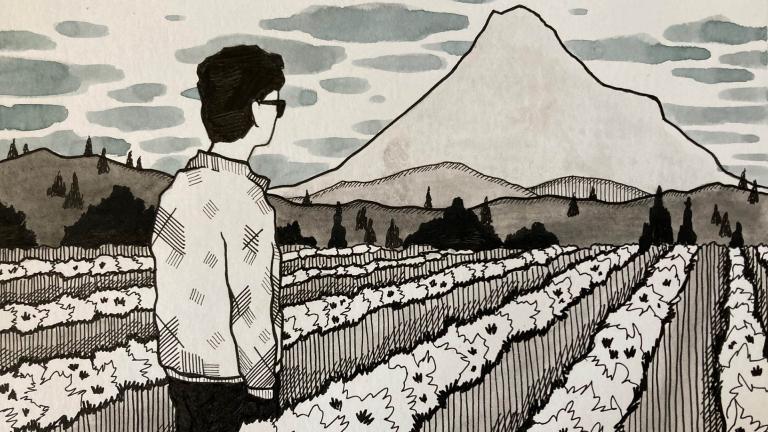
2021 Gift Guide
Last Minute Gift Guide Here are some gift ideas from the Transom crew: items we’d give audio producers we know, or that we’ve had our eyes on for ourselves. We’ve included a range of items, from inexpensive accessories to major splurges, and plenty of in-between. Prices on electronics tend to be volatile, and there are […]
The post 2021 Gift Guide appeared first on Transom.
Antarctica’s Thwaites Glacier ice shelf could collapse within five years
The demise of a West Antarctic glacier poses the world’s biggest threat to raise sea levels before 2100 — and an ice shelf that’s holding it back from the sea could collapse within three to five years, scientists reported December 13 at the American Geophysical Union’s fall meeting in New Orleans.
Thwaites Glacier is “one of the largest, highest glaciers in Antarctica — it’s huge,” Ted Scambos, a glaciologist at the Boulder, Colo.–based Cooperative Institute for Research in Environmental Sciences, told reporters. Spanning 120 kilometers across, the glacier is roughly the size of Florida, and were the whole thing to fall into the ocean, it would raise sea levels by 65 centimeters, or more than two feet. Right now, its melting is responsible for about 4 percent of global sea level rise.
But a large portion of the glacier is about to lose its tenuous grip on the seafloor, and that will dramatically speed up its seaward slide, the researchers said. Since about 2004, the eastern third of Thwaites has been braced by a floating ice shelf, an extension of the glacier that juts out into the sea. Right now, the underbelly of that ice shelf is lodged against an underwater mountain located about 50 kilometers offshore. That pinning point is essentially helping to hold the whole mass of ice in place.
But data collected by researchers beneath and around the shelf in the last two years suggests that brace won’t hold much longer. Warm ocean waters are inexorably eating away at the ice from below (SN: 4/9/21; SN: 9/9/20). As the glacier’s ice shelf loses mass, it’s retreating inland, and will eventually retreat completely behind the underwater mountain pinning it in place. Meanwhile, fractures and crevasses, widened by these waters, are swiftly snaking through the ice like cracks in a car’s windshield, shattering and weakening it.
This deadly punch-jab-uppercut combination of melting from below, ice shattering and losing its grip on the pinning point is pushing the ice shelf to imminent collapse, within as little as three to five years, said Erin Pettit, a glaciologist at Oregon State University in Corvallis. And “the collapse of this ice shelf will result in a direct increase in sea level rise, pretty rapidly,” Pettit added. “It’s a little bit unsettling.”
Satellite data show that over the last 30 years, the flow of Thwaites Glacier across land and toward the sea has nearly doubled in pace. The collapse of this “Doomsday Glacier” alone would alter sea levels significantly, but its fall would also destabilize other West Antarctic glaciers, dragging more ice into the ocean and raising sea levels even more.
That makes Thwaites “the most important place to study for near-term sea level rise,” Scambos said. So in 2018, researchers from the United States and the United Kingdom embarked on a joint five-year project to intensively study the glacier and try to anticipate its imminent future by planting instruments atop, within, below it as well as offshore of it.
This pull-out-all-the-stops approach to studying Thwaites is leading to other rapid discoveries, including the first observations of ocean and melting conditions right at a glacier’s grounding zone, where the land-based glacier begins to jut out into a floating ice shelf. Scientists have also spotted how the rise and fall of ocean tides can speed up melting, by pumping warm waters farther beneath the ice and creating new melt channels and crevasses in the underside of the ice.

As Thwaites and other glaciers retreat inland, some scientists have pondered whether they might form very tall cliffs of ice along the edge of the ocean — and the potential tumble of such massive blocks of ice into the sea could lead to devastatingly rapid sea level rise, a hypothesis known as marine ice cliff instability (SN: 2/6/19). How likely researchers say such a collapse is depends on our understanding of the physics and dynamics of ice behavior, something about which scientists have historically known very little (SN: 9/23/20).
The Thwaites collaboration is also tackling this problem. In simulations of the further retreat of Thwaites, glaciologist Anna Crawford of the University of St. Andrews in Scotland and her colleagues found that if the shape of the land beneath the glacier dips deep enough in some places, that could lead to some very tall ice cliffs — but, they found, the ice itself might also deform and thin enough to make tall ice cliff formation difficult.
The collaboration is only at its halfway point now, but these data already promise to help scientists better estimate the near-term future of Thwaites, including how quickly and dramatically it might fall, Scambos said. “We’re watching a world that’s doing things we haven’t really seen before, because we’re pushing on the climate extremely rapidly with carbon dioxide emissions,” he added. “It’s daunting.”