We have officially moved our blog presence over to Medium. Follow us there to get all the latest news about PRX, the Podcast Garage, Radiotopia and much more. See you there!
The post We’ve Moved! appeared first on PRX.
We have officially moved our blog presence over to Medium. Follow us there to get all the latest news about PRX, the Podcast Garage, Radiotopia and much more. See you there!
The post We’ve Moved! appeared first on PRX.
Jonathan Albright Joins Tow Center for Digital Journalism as Research Director
The Tow Center is pleased to announce Dr. Jonathan Albright as its new Research Director. Jonathan’s research around networks of propaganda and misinformation has recently captured attention across the world. His research into the use of platforms such as YouTube to proliferate high volumes of automated misinformation has been featured across a broad range of publications including The Guardian, The Washington Post, and Fortune.
His work lies at the intersection of communication, culture, and technology, focusing on the analysis of online and socially mediated news events and activism, data-driven journalistic methods, and visual storytelling. Jonathan joins the Tow Center from Elon University, where he is an assistant professor of media analytics in the school of communication. In his role as Research Director, Jonathan will lead the Center’s fellows and research projects, working closely with Tow Center Director Emily Bell.
We are extremely excited that Jonathan is coming to work at the Tow Center, bringing with him his cutting-edge research into the new ecologies of journalism and misinformation. There is no more pressing issue in the field right now and Dr. Albright’s work will add to the Tow Center’s reputation for examining emerging trends in technology and how they apply to the field of journalism. Jonathan’s understanding of how technologies are being deployed and networked through social platforms to create an ecosystem of targeted misinformation is central to understanding current issues affecting both politics and journalism.
Tow Knight Projects and Senior Fellows Focus Tow Center Agenda On Investigating the News Environment of the Social Web.
This new cohort of Knight News Innovation Fellows at the Tow Center brings a wealth of expertise in examining some of the most timely and important issues facing journalism today. They will pursue a range of research topics, including automated journalism, collaborative journalism, information integrity, local journalism, political polarization, and the General Data Protection Regulation (GDPR).
These new fellows join over 60 current and former fellows at the Tow Center. The Fellowship projects are funded by the John S. and James L. Knight Foundation. Read more about all Knight News Innovation research projects at the Tow Center here.
2017 Knight News Innovation Fellows Projects:
Fact Trust
Mike Ananny, Assistant Professor of Communication and Journalism, Annenberg School for Communication and Journalism, University of Southern California
How does a Facebook-led partnership of news organizations and fact-checkers mix algorithmic and editorial judgment to fight “fake news”? Through interviews with key personnel and analyses of documents and infrastructures, this project tells the story of how techno-journalistic platforms make facts. Better understanding such hybrids helps scholars, technologists, journalists, and audiences appreciate how to trust and critique news networks—and how to think about and reconfigure power between publishers and platforms.
Engagement with Robot News: How Automated Journalism Affects Credibility and Engagement
Jan Boehmer, Assistant Professor of Journalism in the College of Communications at Pennsylvania State University
Technological advances and societal transformations have shaken up the journalism industry. One of the most disruptive examples of this change is the emergence of automated journalism. While a growing number of news organizations rely on algorithmic processes converting data into narrative, the effects on the audience are not fully explored. This research investigates how attributing authorship of news items to an algorithm affects readers’ perceptions of credibility and intentions to engage with the content.
Collaborative journalism and the creation of a new commons
Carlos Martinez de la Serna, Director of Digital Innovation at Univision News
The SF Homeless Project, the News Integrity Initiative, and ElectionLand are three major examples of an emerging pattern in journalism: the cooperation of multiple organizations and individuals to address big challenges at a scale that no single organization could by itself. This project will research how the combination of decentralized, networked, and traditional models for news production and distribution are creating new opportunities to support journalism.
Partnering with the Public: How ‘Audience Engagement’ is Reinventing Local Journalism
Jacob L. Nelson, PhD Candidate, Northwestern University
This project explores the way that three news organizations (City Bureau, Hearken, and The Chicago Tribune) conceptualize, implement, and measure audience engagement. At a moment when the news media’s credibility and economic sustainability are in doubt, this project examines what journalists in both traditional and innovative newsrooms believe “success” should look like. In doing so, it attempts to answer the question: Are journalism’s goals changing, or just its methods?
From Polarization to Public Sphere
Andrea Wenzel, incoming Assistant Professor, Temple University with Sam Ford, media executive and consultant
This research study examines what political polarization and urban-rural divisions look like in the daily lives of residents at the local level. The project focuses on a case study of a region of Kentucky, including the “purple” college town of Bowling Green and the more “red” and rural area of Ohio County. Drawing from interviews and media diaries, the study examines the communication ecologies of residents and the potential for community engagement across demographic and ideological lines. The study will also explore challenges and opportunities in the rural media landscape through a workshop with local and regional media and community stakeholders.
Bridging Stories: Countering Misinformation in Chinese Language News Ecosystem
Chi Zhang, Doctoral Candidate, Annenberg School for Communication and Journalism, University of Southern California
This project investigates and intervenes in the immigrant Chinese news ecosystem, which has seen significant misinformation, to bridge the information silos between Chinese-speaking immigrants and their surrounding community. In collaboration with Alhambra Source, a trilingual civic news site serving the immigrant majority city of Alhambra, and Asian Americans Advancing Justice-Los Angeles, we monitor ethnic Chinese media and social media outlets, and engage community members to produce and distribute bridging stories.
The General Data Protection Regulation in a media context: threat or opportunity for media companies?
Hugo Zylberberg, Cyber Fellow, Columbia University’s School of International and Public Affairs with Susan E. McGregor, Assistant Director of the Tow Center for Digital Journalism
The General Data Protection Regulation (GDPR) will go into effect in May 2018 in the EU, yet most companies including media companies still know very little about its implications for their business models. The business models in the media ecosystem have rapidly evolved in the last couple of decades and traditional players have been threatened by new entrants. This project will not only explore the many ways that this imminent legislation will affect media companies, as well as the technology platforms upon which they increasingly depend, but also look at how in return the media could seize this regulation as an opportunity to leapfrog over the digital transformation.
Senior Research Fellow :
Award-winning data journalist Jon Keegan joins the Tow Center in 2017 as a Senior Research Fellow from The Wall Street Journal where he led projects in data journalism and visualization. In the past year Keegan built WSJ’s award-winning “Blue Feed, Red Feed” which visualizes political polarization on Facebook. At the Tow Center, Jon will be leading an initiative to explore partisan sources on social media.
This project—the first in a suite of tools for consumers of news on social media—will build an open database of popular news sources on Facebook, illustrating their reach across platforms, surfacing data about the owners, advertising networks, authors, and affiliations. This will take the form of a user-friendly public website, as well as an API so other developers can build tools that use this database to illuminate the murky world of partisan news on social media. This project aims to empower the public to be more responsible about the news they share with their networks, as well as increase media literacy around online news sources.
Jon joins Senior Research Fellows Pete Brown, Elizabeth Hansen, and Andrea Wenzel.
_______________________________________________________
The Fellowships are part of a $3 million research program funded by the Knight Foundation. Since the program began, the Center has published a number of reports as well as shorter guides on key trends including automated journalism, chat apps, and podcasting. The Tow Center also hosts large-scale conferences and smaller, skills-based workshops to further conversation around the published research.
The Tow Center offers fellowships to academics, journalists and technologists, disseminating research for application in newsrooms as well as classrooms. For more information, please email towcenter@columbia.edu.
About the Tow Center for Digital Journalism
The Tow Center for Digital Journalism, established in 2010 through gifts from the Tow Foundation and others, provides journalism students with the skills and knowledge to lead the future of digital journalism and serves as a research and development center for the profession as a whole.
About Knight Foundation
Knight Foundation supports transformational ideas that promote quality journalism, advance media innovation, engage communities and foster the arts. We believe that democracy thrives when people and communities are informed and engaged. For more visit, knightfoundation.org.
MAY 11, 2017, 9am–5pm
Harvard Law School
Wasserstein Hall
1585 Massachusetts Avenue
Cambridge, MA
Presented by the Berkman Klein Center for Internet & Society at Harvard University and the Tow Center for Digital Journalism at the Columbia Journalism School, in Collaboration with the syndicated.media Open Working Group
OVERVIEW
On May 11, 2017, the Berkman Klein Center for Internet & Society and Tow Center for Digital Journalism will host and facilitate a symposium, in collaboration with the syndicated.media open working group, to address the process of developing standards that support the distribution of syndicated audio content. The event will look back at the evolution of the RSS protocol and look forward at the need for new technical infrastructure to support an expanding podcast distribution landscape. Participants will have the opportunity to engage in both higher-level policy discussions and technical deep-dives throughout the course of this one-day event.
The goals of the symposium include furthering cooperation among various players in the world of podcast creation and distribution and consideration of recommendations on standards, enhancements, extensions, and other methods to support the growth of podcasting as an open and inclusive medium. It will bring together academic, non-profit, and commercial constituencies to address, among other things:
The symposium will mix talks and panels that generally address these issues (curated by the Berkman Klein and Tow Center teams) with opportunities for breakouts that allow deeper dives into technical questions around distribution protocols for podcasts and other forms of serialized media (facilitated by members of the syndicated.media community).
Registration is limited; sign up here. The symposium will be followed by a separate, two-day “Audio for Good” event, co-hosted by PRX, RadioPublic, and the HBS Digital Initiative. Applications to participate can be submitted here.
BACKGROUND
In the last two years, podcasting has hit a tipping point in mainstream adoption. Over fifty-seven million people listen to podcasts each month in the US, growing at over 25% per year. A rapidly expanding industry and ecosystem is taking shape across content creation, publishing, distribution, discovery, and monetization. Apple remains the largest platform for podcasting, with major players like Google, Spotify, Audible, and Pandora beginning to integrate podcasts into their services. Independent creators, content networks, and podcast apps and a variety of service providers are starting to arrive. Public radio remains a foundational force, dominating the charts with shows from NPR, PRX, WNYC, This American Life, and others.
There is also a growing number of industry conferences, events, and associations starting to address myriad needs in the podcasting space, including Podcast Movement, the Podcast Summit, Third Coast International Audio Festival, in addition to an uptick in live events for podcast fans in venues across the country.
Growth in content, audience, and revenue is intensifying the competitive landscape, with resulting pressure to address problems related to metrics, metadata, advertising, audience insight, and more.
These are unique and exciting challenges in developing technologies that power an open standard like podcasting. From the basic and ubiquitous formats that have come to be relied on, to recent advances like dynamic audio serving and advanced metrics and analytics, there is a wide array of topics that must be addressed.
This convening seeks to provide a forum in which to discuss specific technical details that relate to podcast distribution and to learn from and compare notes with people who have been deeply involved in questions of governance, standard-setting, and open innovation across a wide variety of fields. A primary goal for the syndicated.media community involves establishing processes and developing timelines for future development initiatives.
ABOUT THE HOSTS
The Berkman Klein Center for Internet & Society is a research center based at Harvard University. The Center’s Center’s mission is to explore and understand cyberspace; to study its development, dynamics, norms, and standards; and to assess the need or lack thereof for laws and sanctions. Berkman Klein is a research center, premised on the observation that what it seeks to learn is not already recorded. The Center’s method is to build out into cyberspace, record data, self-study, and share. Its mode is entrepreneurial nonprofit.
The Tow Center for Digital Journalism, established in 2010, provides journalists with the skills and knowledge to lead the future of digital journalism and serves as a research and development center for the profession as a whole. Operating as an institute within Columbia University’s Graduate School of Journalism, the Tow Center is poised to take advantage of a unique combination of factors to foster the development of digital journalism. Its New York location affords access to cutting-edge technologists, a strong culture of journalism and multiple journalism and communication schools, with outstanding universities attached to them. The Tow Center is where technology and journalism meet, and where education and practice meet.
Syndicated.media is a community-driven working group with a mission to ensure that podcasting grows to meet the needs of listeners, creators, producers, publishers, advertisers, and developers, without sacrificing the groundwork that has been established to make it an open and inclusive medium. The goal of the working group is to develop clear and comprehensive standards and best practices. The group now includes more than 100 representatives from a growing number of podcast industry stakeholders, including international participants, and intends to incrementally release updates to existing standards and recommendations for new proposals.
We’re big fans of the simple idea behind the #TryPod campaign: share a podcast you love with someone you love.
At PRX, we work with talented indie producers all over the world, but this month we want to share five podcasts made in our own Boston backyard. Each show tells stories in a unique way and belongs to our growing PRX Podcast Garage community.
In this blog, Podcast Garage Community Manager Alex Braunstein gives you her take on each show and asks their hosts about an episode you should try.
Show: Hiding in the Bathroom, a show for those of us in business who want to embrace our introverted selves.
Episode to Try: How to Do Powerful Work
Alex says: I’m insanely jealous of how at home Morra looks in front of a microphone. As a host, she oozes warmth and a desire to take on the world. It’s no surprise that by day, she runs digital campaigns for mission-driven clients like Planned Parenthood. Her Forbes podcast engages women in frank conversations about introversion, self-care, and feminism in the workplace. Count me in.
Host Morra Aarons-Mele says: “Meighan is humble in the face of a really big life, and she has incredible advice to give those of us who want our work to have meaning. She took Malala Fund from an organization with no logo to a globally-recognized leader in helping educate the world’s girls. And I’ve felt her sacrifices, and admired her fortitude even as she made some really hard decisions and missed her son greatly. Meighan believes she doesn’t choose her work; it chooses her. She wants to serve, she has great skills, and the job finds her. I think this episode is essential listening to anyone who feels like the work they want to do eludes them.”
Show: Soonish, a show about our technological future, and how our choices today will shape that future, though often in ways we can’t predict.
Episode to Try: Meat Without the Moo
Alex says: Wade’s storytelling is so precise and thoughtful that you can just tell the guy has a PhD from MIT. I love his ambitious approach to the show, which is remarkably produced by a team of one. It truly feels like he’s on an epic quest to discover the future and I’m along for the ride. You will literally be smarter just by listening!
Host Wade Roush says: “One of the places this episode ends up is an old automobile factory in San Leandro, CA where a startup called Tiny Farms has built a huge cricket farm. So as the CEO is walking me around the place, I’m trying not to step on any loose crickets, and then I’m trying to stick my mic into their nest to get some cricket-song on tape without scaring them. I’m being so careful! And then the CEO explains that pretty soon they’ll knock out these crickets with carbon dioxide and freeze them and grind them up for cricket flour. And I realize I’m totally okay with that. It’s funny, because I’m vegetarian, so I’m largely against eating animals. But I’d eat crickets all day if it would save a few cows and chickens. I guess we all have our own moral thresholds – and our own choices to make about the future.”
Show: One in a Billion, a show about China, through the voices of Chinese millennials in America.
Episode to Try: Finding Love in America: Reality Bites
Alex says: Being in Mable’s presence is electrifying. She talks fast and dreams big. It’s no wonder she’s put the word “billion” into her show’s title and is personally chasing down the untold stories of Chinese millennials living in America. A former producer for Good Morning America and Dateline, Mable is a seasoned pro exploring a new medium. She’s currently searching for other producers to join her and I can’t wait to hear what they do next.
Host Mable Chan says: “I love Qinghua’s character – adventurous, dutiful and defiant. I find it intriguing that a young woman from the middle of China came alone to America to get her PhD in Engineering. She quickly earned her degree by age 25 and landed her dream job as a data scientist at Silicon Valley! But just as everything seemed to be going well, she was getting bored at work while her 7-year relationship with her boyfriend was suddenly over. How did she turn things around – not only for herself but also for thousands other Chinese looking for love in America? You gotta listen.”
Show: Caught Up, a show with the latest and greatest scoop about South Boston and beyond.
Episode to Try: Losing My Religion
Alex says: The makers of the magazine Caught in Southie have captured my heart with a show about all-things-South-Boston. Even though I’ve never been to Southie (gimme a break, I just moved here), I love eavesdropping on Heather and Maureen’s local take on their neighborhood. They claim to know nothing about podcasting, but they’re clearly naturals when it comes to something pretty unteachable: chemistry. I laugh out loud when they’re recording in our studio and somehow feel nostalgia for a place I’ve never lived.
Hosts Maureen Dahill and Heather Foley say: “In this episode, you get a sense of how we grew up in South Boston. The majority of the kids growing up in Southie went to Catholic School which was taught by nuns. Needless to say, those nuns shaped who we are today – good, bad or otherwise i.e. our love of wine lightening the load of Catholic guilt.”
Show: The Courage to Listen, a show that explores issues of police community relationships, gang violence and race in America.
Episode to Try: Commissioner Ed Davis
Alex says: I crave compassionate leaders like Reverend Brown who know how to listen. It’s a privilege just to be a fly on the wall for his conversations about violence prevention, community mobilization, and policing. He’s credited as “an architect of The Boston Miracle,” in which a group of local preachers cut youth violence in the city by 79%… by listening. I find this show’s straightforward interview style totally gripping.
Host Reverend Jeffrey Brown says: “Ed led the police department for the city of Boston, and was featured in Mark Wahlberg’s film ‘Patriot’s Day.’ We had a fascinating discussion about the Marathon bombing, his personal transformation from traditional to community-oriented policing, and his thoughts on the future of police reform today. Oh, and we asked him how he felt about John Goodman playing him in the movie!”
Learn more about our membership at the Podcast Garage, schedule a session in the studio, or swing by during our open hours for a tour of the space.
The post Five Local Podcasts to Try for #TryPod appeared first on PRX.



We wear a lot of hats here at PRX, from distributing podcasts of all stripes, to running our Podcast Garage training facility in Boston, to managing our open audio marketplace at PRX.org.
Since our founding in 2003, our PRX.org marketplace has grown to house over 100,000 audio pieces—uploaded from around the world—from short, artsy works to hour-long music specials. Creators post their work on our site, and public radio stations and digital networks shop there for new work for their local audiences. The goal is to give great audio a second home online, and ideally a third home on broadcast and digital, where it can reach even more ears.
To celebrate our marketplace, we host our annual Zeitfunk awards. Below you’ll find the list of producers, programs and stations who sold the most in the PRX marketplace in 2016. These numbers are calculated from individual licenses of audio pieces on PRX. (Subscription-only shows like This American Life and The Moth are not included in these results.)
Most Licensed Pieces
1. Best of the Best: The 2016 Third Coast Festival Broadcast
2. The Rose Ensemble: Christmas in Baroque Malta from The WFMT Radio Network
3. Ten From David: A David Bowie Appreciation from Paul Ingles
4. A Bow To Prince: An Appreciation of The Artist from Paul Ingles
5. The Pioneers of Punk – Please Kill Me: Voices from the Archives from Creative PR
Most Licensed Series
(This list does not include subscription-only series, like This American Life and The Moth)
1. Global Village with Chris Heim
2. Classical Guitar Alive!
3. The International Americana Music Show
4. Travelers In The Night
5. Blue Dimensions
6. The Bluegrass Review
7. Stuck in the Psychedelic Era
8. Strange Currency
9. The Stone Age
10. The Latin Alternative
Most Licensed Producers
These are individual creators on PRX who sold the most.
1. Tony Morris
2. Daniel Wargo
3. Michael Park
4. Al Grauer
5. Philip Nusbaum
6. Stephen R Webb
7. Vic Muenzer
8. Mat Kaplan
9. Chris Kuborn
10. Jamie Hoover
Most Licensed Groups
Teams of producers who sold the most.
1. With Good Reason
2. Deutsche Welle
3. Bluesnet Radio
4. BackStory with the American History Guys
5. Science Update
6. NPR Music
7. L.A. Theatre Works
8. The Steve Pomeranz Show
9. Great Lakes Today
10. Footlight Parade
Most Licensed Stations
Stations are huge creators of work, too. These are the ones that sold the most in 2016.
1. KMUW
2. The WFMT Radio Network
3. WMHT
4. WSIU
5. WBEZ
6. WOUB
7. South Carolina ETV Radio
8. WKSU
9. Kansas Public Radio
10. Louisville Public Media
Most Licensed Debut Producers
Producers who were new to PRX in 2016 who sold the most.
1. Brooke Halpin
2. Matt Davenport
3. Ryan Sweikert
4. Reade Levinson
Most Licensed Debut Groups
Teams of producers who were new to PRX in 2016 who sold the most.
1. Great Lakes Today
2. The World According to Sound
3. On Being with Krista Tippett
4. Safe Space Radio
5. Christopher Kimball’s Milk Street Radio
6. Outside Magazine
Most Licensed Producers by PRX Remix
PRX Remix is our XM Station, app, and broadcast show that purchases work directly from PRX.org. These are individual producers from which Remix purchased the most.
1. Nate DiMeo
2. Eric Molinsky
3. (tie) Erica Heilman and David Green
Most Licensed Groups by PRX Remix
PRX Remix is our Sirius XM station, app, and broadcast show that purchases work directly from PRX.org. These are teams of producers from which Remix purchased the most.
1. The World According to Sound
2. RadioArt
3. Criminal
4. (three-way tie) KCRW’s Independent Producer Project, HowSound, and Out of the Blocks
Stations That Licensed the Most
We like to honor the stations that license (download for air) the most from PRX as well.
1. WOUB
2. WLPR
3. KMXT
4. WMUU-LP
5. KMRE-LP
6. KCMJ Community Radio
7. KSRQ
8. RadioFreePalmer
9. KKRN
10. KKWE Niijii Radio
Most Licensed Piece Lengths
Producers, these are the lengths of pieces on PRX that sell the most. You can see that hour-long and 5-min. or shorter pieces are the most popular.
1. 55-60 min. (20,275 individual licenses on PRX in 2016)
2. 5 min. or less (6,883 licenses)
3. 50-55 min. (4,735 licenses)
4. 25-30 min. (2,746 licenses)
5. 5-10 min. (2,416 licenses)
6. 30-35 min. (982 licenses)
7. 10-15 min. (466 licenses)
8. 40-45 min. (356 licenses)
9. 60-65 min. (350 licenses)
10. 15-20 min. (213 licenses)
11. 35-40 min. (182 licenses)
12. 10-25 min. (176 licenses)
13. 45-50 min. (84 licenses)
The post The 13th Annual Zeitfunk Awards appeared first on PRX.


Radiotopia is headed out on our first West Coast tour! Radiotopia Live brings extraordinary, cutting-edge podcasts out of your headphones and onto the stage.
Join us in Seattle, Portland, San Francisco and LA for live radio, conversations, stories and music from your favorite Radiotopia podcasts including 99% Invisible with Jon Mooallem and the Brink Players, Criminal, The Allusionist, The Memory Palace, Mortified and more. Plus a performance of The West Wing Weekly in LA only.
Full tour schedule:
Monday, May 8 – Aladdin Theater in Portland, OR
Tuesday, May 9 – Moore Theatre in Seattle
Thursday, May 11 – Nourse Theater in San Francisco
Friday, May 12 – Theatre at the Ace Hotel in LA
Get all the info, including tickets, at Radiotopia.fm/live. Enter code “RTLIVE” to get the best seats before the public; our exclusive pre-sale runs through 11:59 p.m. on March 2rd. Hope to see you there!
The post Radiotopia Live: Announcing Our West Coast Tour! appeared first on PRX.


Episode | Broadcast Feed | COVE Release |
Ep. 1 - Origins | 2/27/17 | 2/27/17 at 9pm ET |
Ep. 2 - The Cross and The Crescent | 2/27/17 | 2/27/17 at 10pm ET |
Ep. 3 - Empires of Gold | 3/1/17 | 2/28/17 at 9pm ET |
Ep. 4 - Cities | 3/1/17 | 2/28/17 at 10pm ET |
Ep. 5 - The Atlantic Age | 3/2/17 | 3/1/17 at 9pm ET |
Ep. 6 - Commerce and the Clash of Civilizations | 3/2/17 | 3/1/17 at 10pm ET |

 The PBS development community is invited to gather at the Annual Meeting in San Diego for a new learning and networking experience!
  Photo by Rachael Ketterer
This is not your standard photo internship!
This internship is an opportunity to learn more about the world of photo editing. Our goal isn’t to make you into a photo editor; we view this internship as a chance for you to understand what it is like to be an editor and improve your visual literacy, which can help you become a better photographer.
The internship runs from May 22, 2017 to August 11, 2017. Applications are due Sunday, March 5, 2017 at 11:59pm eastern.
Editing: You’ll be working closely with the Visuals Team’s photo editors (Ariel and Emily) on fast-paced deadlines – we’re talking anywhere from 15 minutes to publication, to short-term projects that are a week out. You’ll dig into news coverage and photo research, learning how to communicate about what makes a good image across a range of news topics, including international, national, technology, arts and more.
Photography: Depending on the news cycle, there may be opportunities to photograph DC-area assignments. This can mean you’d have one or two shoots in a week, or maybe just a couple shoots in a month. You’ll work closely with a radio or web reporter while out in the field, and a photo editor will go through your work and provide feedback for each assignment. There will also be a chance to work on portraiture and still lifes in our studio.
We also encourage each intern to create a self-directed project to work on throughout the semester. It can be an Instagram series, video, photo essay, text story or anything in-between. You can work independently or with another intern or reporter.
You will be part of NPR’s intern program, which includes 40-50 interns each semester, across different departments. There will be coordinated training and intern-focused programming throughout the semester, which includes meeting NPR radio hosts, career development and other opportunities. As an intern, you will be treated as a member of the team. Many NPR employees are former interns and they’re always willing to help current interns.
Any student (undergraduate or graduate), or person who has graduated no more than 12 months prior to the start of the internship period to which he/she is applying is eligible. Interns must be authorized to work in the United States.
We’re looking for candidates that have a strong photojournalism background. An interest in editing, or experience with video/photo editing is a nice plus. It’s also helpful if you’ve completed at least one photojournalism-focused internship prior to applying (let us know if you have!), though it’s not necessary. A portfolio, however, is required.
We also want folks who can tell us what they would like to accomplish during their time at NPR. What do you want to learn? What do you want to try? We try to shape each internship around our intern, so we rely on you to tell us what goals you have for your time with us!
Does this sound like you? Read about our expectations and selection process and then apply now!
Into code, design, and data? Check out our design/development internship.
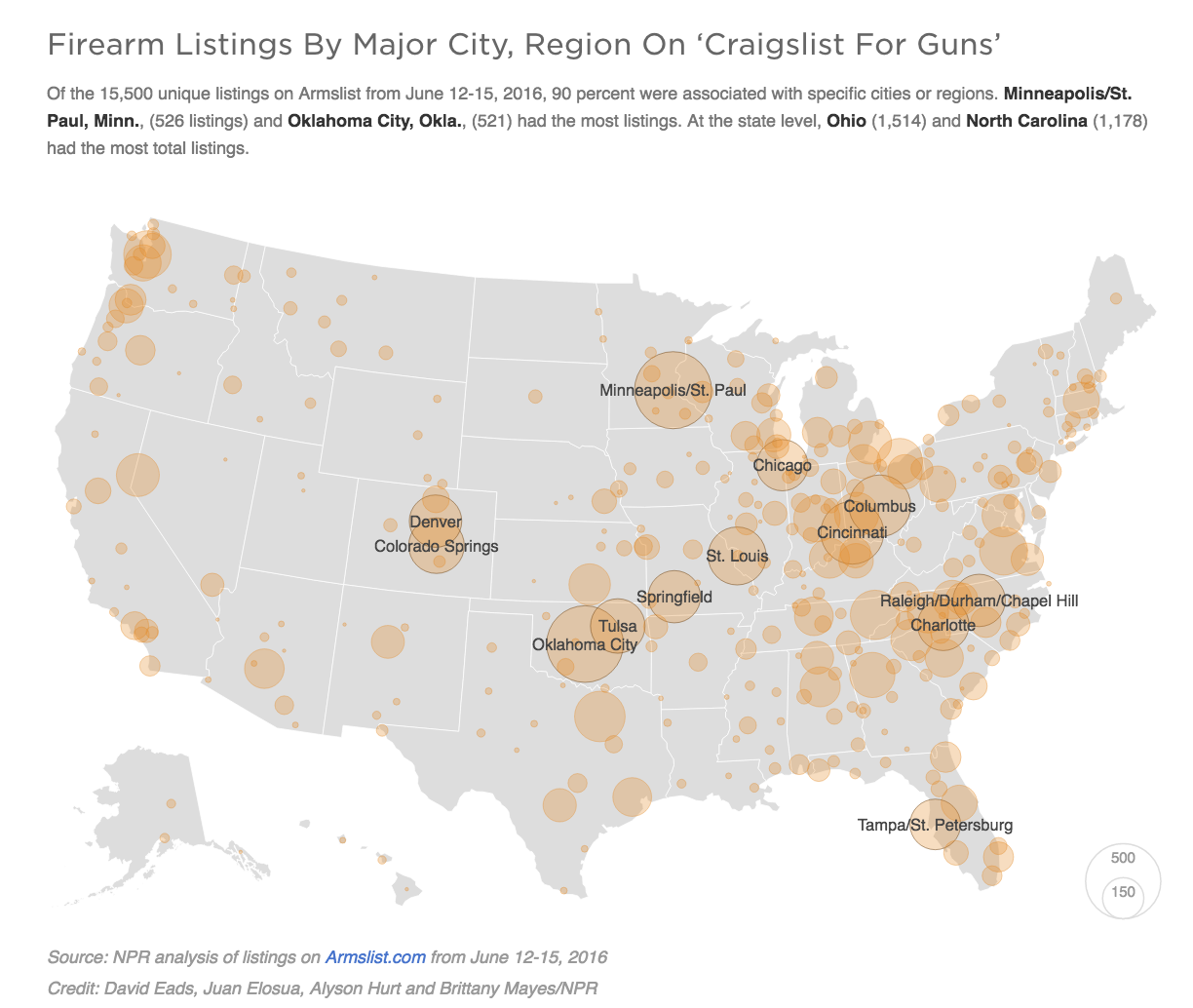 Map by Visuals Team intern Brittany Mayes
Are you data-curious, internet savvy, and interested in journalism? Do you draw, design, or write code? We are looking for you.
We’ve had journalists who are learning to code, programmers who are learning about journalism, designers who love data graphics, designers who love UX, reporters who love data, and illustrators who make beautiful things.
Does this sound like you? Please join our team! It isn’t always easy, but it is very rewarding. You’ll learn a ton and you’ll have a lot of fun.
The internship runs from May 22, 2017 to August 11, 2017. Applications are due Sunday, March 5, 2017 at 11:59pm eastern.
Read about our expectations and selection process and then apply now!
Into pictures? Check out our photo editing internship.


 Radiotopia turns three this month, and to celebrate we launched a fancy new website! We also commissioned our first-ever original ad music from DJ, producer and musician JD Samson, who leads the band MEN and is one-third of the electronic-punk-feminist performance project, Le Tigre. Besides writing some fantastic music for us, JD kindly answered a few questions about working on the project.
I love Radiotopia’s programming, and felt really excited to be seen as an articulation of their aesthetic. Creating this kind of accompaniment was extremely meditative and exploratory for me, which is something I like to challenge myself with often.
The process was really interesting to me because there were so many aspects of the music that needed to make sense for ALL the producers. Some people wanted happier tunes, some people sad, so I had to really make sure the music was atmospheric, but not a “song”. I had to ensure the tone was kind of dull. Not too extreme in either direction, and make sure there weren’t a lot of melodies crowding the space. It was fun for me to break down my compositions after I made them and often heard the comment “make it more boring.” I honestly loved this direction because it forced me to see aspects of my production that were unnecessary in this case.
The post Introducing: Radiotopia Ad Music from JD Samson appeared first on PRX.


Five Things is an ongoing live series at the PRX Podcast Garage hosted by Julie Shapiro (EP, Radiotopia). The series invites some of today’s most talented and successful producers, artists, writers and thinkers to share five things —audio, visuals, books, objects or something else entirely — that have shaped their creative practice over time, and inform how they approach work today. In short: interesting people share cool stuff they love.
For the second installment of Five Things, we welcomed Jody Avirgan, host of the FiveThirtyEight politics podcast, producer of the upcoming Thirty for Thirty documentary podcast from ESPN, ultimate frisbee enthusiast and champion of sesame sticks and dried mango. Watch a video of the conversation and recap Jody’s Five Things below.
“This is my favorite YouTube video of all time. It happens to include one of my favorite songs of all time, but more than anything it’s a random captured moment of peace that gives a window into a stranger’s life. If you read the comments you learn a tragic coda. I’ve never really brought myself to look into the life of Calab, but I’m grateful for this moment.”
 “This book sometimes slips into corporate-CEO speak, but there’s a lot of wisdom here. I’ve learned more from sports than almost anything. Two ideas in particular stick with me. One is the idea of “competitive greatness,” which is basically another name for “grace under pressure.” I think that your capacity to learn and perform under pressure is far more important than talent or skillset. The other thing I love about Wooden is his focus on process over outcomes. Winning/success is almost a byproduct, and afterthought, of doing all the steps along the way with attention and enthusiasm.”
“A  beautiful radio piece that listens as much as it talks. I love how it just goes to a place and sits. It’s un-narrated, which I don’t think people do enough, and it’s full of great moments. It’s also incredibly indulgent! Take an indie rock singer, have them write a song about a bird, make it over 10 minutes? Why not! But there’s a valuable lesson here, if someone’s going to let you get away with a piece like this, go for it.”
 “The basic idea here is that some art is full of all the perfect elements of content, composition, execution… but still somehow lack that thing that “shoots out of it like an arrow.” Thinking about this taught me to be strategic about trying to create these moments in my work. When you have something that you think can be a punctum, make sure you’re getting out of the way and letting it do its thing.”
“Just one of my favorite songs from what I think is the best moment in musical history: 1960s Jamaica. I love that many of the early reggae songs were soul covers, which is a reminder that every artist, even the ones we think of as sui generis, starts out as a deep fan. Fandom is a perfectly good place to start – it’s kind of the only place to start. So, copy the stuff you love.”
The Charles Mingus CAT-alog for Toilet Training Your Cat

Prompted by Julie, Jody also shared responses to a call out on the What’s the Point podcast for listeners to track, visualize and illustrate a week’s worth of podcast listening via postcard.
March 22nd: Jenna Weiss-Berman (podcast producer, co-founder of Pineapple Street Media, former director of audio for BuzzFeed).
About Jody Avirgan
Jody is the host of the FiveThirtyEight politics podcast. His next venture is a series of sports-related audio docs under the “30 for 30” umbrella, coming spring 2017. Before ESPN, he was at WNYC’s Brian Lehrer Show, did reporting for the WNYC newsroom, and went on air and asked you for money during the pledge drive. He’s worked with On The Media, Radiolab, 99% Invisible, Marketplace, Studio 360 and many more. On the side, he hosts the comedy and storytelling show Ask Roulette, where strangers ask each other questions live on stage. He lives in Sunset Park, Brooklyn. Find him online at @jodyavirgan and www.jodyavirgan.com.
About Julie Shapiro
Julie Shapiro is the executive producer of Radiotopia. From 2014–15, she was the executive producer of the Australian Broadcasting Corporation’s Creative Audio Unit. In 2000 she co-founded the Third Coast International Audio Festival, where as artistic director, she prioritized innovative audio and a cross-pollinating international listening culture. Shapiro has taught radio to university students, presented at conferences all over the globe, and produced stories for the airwaves and podcasts in the US and beyond. You can find her on twitter @jatomic.
The post PRX Podcast Garage: Five Things with Jody Avirgan appeared first on PRX.


At a time when the accuracy of news sources is in question, and politicians want to restrict access to information, hyperlocal communications have more potential than ever. You Are Here is a project that essentially consists of a Wifi signal that broadcasts a single website. Users can connect to it on their cell phones to leave comments on a curated topic. The project was designed by a team of Tow Fellows including Sarah Grant, Susan McGregor, Benjamen Walker, Dan Phiffer, and Amelia Marzec. Two installations of the project occurred in Tompkins Square Park and the High Line. These are some observations on the challenges of attracting users to a hyperlocal project.
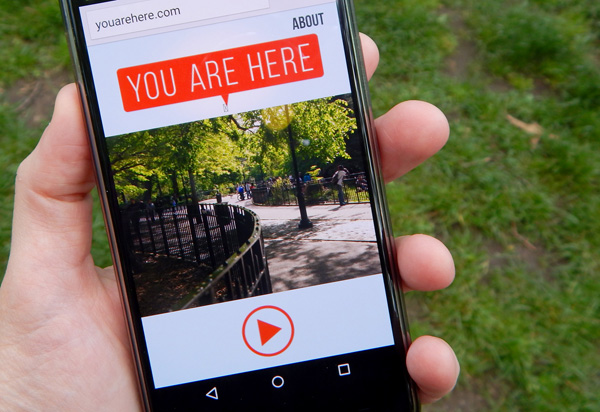
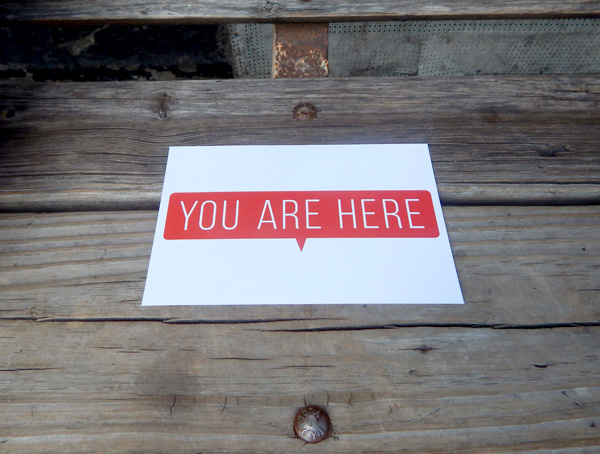
The public expectation of an open Wifi signal is simply that there is potential to connect to the Internet for free. If they find they aren’t able to complete their specific task, which may be to post to Instagram in the park, they will drop off and look for another option. This is the biggest hurdle for any Wifi-based project. You Are Here relies on messaging through posters at the sites of installation to instruct users on how to encounter the project. The audiences and needs in those locations–a barber and a restaurant–are different than the audiences that appear in the interviews for the curated content, which are parkgoers to Tompkins Square Park and the High Line.
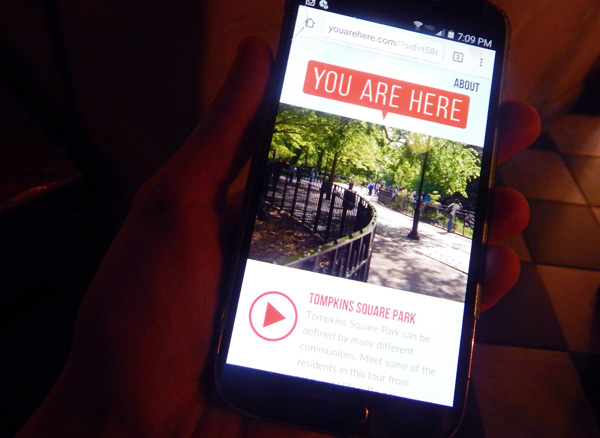
The design of the system must fit the needs of the community. One of the requirements for success is to go into an existing community and find out what their specific needs are, rather than designing a system and then trying to build a community around it. This was a challenge with You Are Here. Hyperlocal communications would be most beneficial when there is a driving need for us to rely on our neighbors.
Designing the systems that carry information must be considered from every angle. A couple of the previous projects by the team members of You Are Here were designed as systems of protest: Occupy.here by Dan Phiffer, and Signal Strength by Amelia Marzec. Inherent in their design is the expectation for their use in a democratic setting, where users would set the tone of the conversations. These methods focus on the decentralization of information, and are less effective when used in a setting that requires top-down information.
Recently considered for the purposes of advertising, You Are Here and similar systems lack significant traffic that would validate them for use in a corporate setting. The failures of these systems as money-making machines contain the potential for them to be used for their original purposes—to give rise to citizen journalism and peer-to-peer communications.
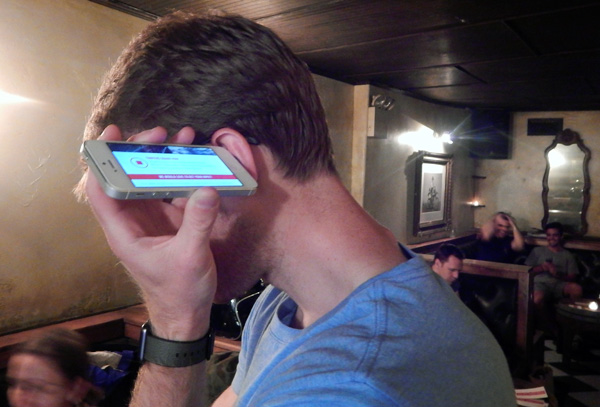
For the long term, users need to care about the content and their interactions with each other. Within commenting systems, users will return when they are emotionally invested—even if that means they are having an argument online. Would an old-fashioned bulletin board be more effective? One benefit of that would be that people without access to smartphones would be able to participate.
In the event of a true emergency, with no connection to the internet, You Are Here could be a valuable addition to a specific local community, possibly if it were able to operate as a forum. Residents would be able to share how they got access to medical care and ATMs, or to discuss rumors from the outside. As we move into uncertain times regarding the use and delivery of information, we will need to be vigilant in finding the truth tellers in our communities that are focused on the greater good.
How can automation help reduce the cost of story discovery in a newsroom? As a Tow fellow in 2015, I had the opportunity to explore this question by building a tool, available online at campaign-finance.org, that automates some of the exploratory data analysis associated with investigative work.
Newsrooms need automated investigative tools now more than ever because their human investigative resources have been decimated. Since the 2008 crash, among the most severely cut departments have been the ones that do long-term, in-depth investigative reporting. Enterprise ideas are the hardest kinds of story ideas to come up with: you don’t know what you don’t know about what’s going wrong in our public institutions. Most investigative stories are reactive, meaning they result from a tip from a whistleblower, versus being proactive, resulting from the reporter’s own inquiry. Since newsrooms were cutting investigative resources, I wondered if we could build computational systems to help the remaining reporters do their jobs more easily and proactively discover story ideas in public data.
During my Tow fellowship, I explored whether a kind of custom software called a Story Discovery Engine could facilitate enterprise reporting on campaign finance issues. (It can.) I was curious about campaign finance in anticipation of the 2016 US presidential election. I had heard a lot about dark money and superPACs in the wake of the 2010 Citizens United decision, but I knew there was a vast amount I didn’t understand about this complex system. However, I did know that reporters who work with campaign finance data spend a lot of time doing the same routine things: downloading data from the FEC and other sources, cleaning it, associating data with known entities, and building basic visualizations. Any time you have routine processes, there is an opportunity for automation.
The last time I built a Story Discovery Engine, I optimized it to find a story in education data. This time, instead of starting with my own story idea, I started by interviewing other journalists. I specifically asked about the kinds of stories they look for, and what the indicators are that suggest a story might be hiding in the data.
To an outsider, these indicators are almost impossible to spot. But to these campaign finance gurus, the signs of corruption were clear as day. One common indicator is administrative overspending. Nonprofit organizations are required to report their income and spending. If the organization spends an unusually high percentage of its income on administration, it is often an indicator that something is amiss internally, and there is likely an opportunity for a story.
However, deciding what percentage is “unusually high” is a judgment call. It is also a judgment call to determine whether there is a story worth pursuing. Some fluctuation in administrative expenses is normal. There might be a perfectly good reason for an organization to have unusually high administrative expenses; a high percentage does not necessarily imply corruption. This ambiguity is the reason that it is unwise to build a system that claims to automatically identify investigative story ideas. It would be unfair (not to mention unethical) to accuse an organization or a public servant of misdeeds based on a naïve computational analysis. It requires human decision-making to fully consider what is going on in a given situation.
This human component is essential for newsrooms to remember. Computers can’t independently determine corruption. Currently, a human is necessary in any automated investigative system. Instead of a fully automated investigative system, in this case I built a human-in-the-loop investigative system. Most people dream of full automation: cars that drive themselves, robots that deliver packages. I don’t dream of this. I’m fine with a world that includes people. I like human judgment, as flawed as it is. I like the drama and the idiosyncrasies of human systems. The difference between a fully autonomous system and a human-in-the-loop system is like the difference between a drone and a jet pack. The drone is autonomous: it is programmed to go to a particular location, drop a bomb or take a picture, and then come back to base by itself. A jet pack (in theory) is designed to be strapped onto the back of a human being in order to accelerate the human’s effort. Both are legitimate system models, and each is useful for a different type of task.
Bailiwick, the system that I built, automates some of the grunt work associated with downloading FEC data, cleaning it, putting it into a database, organizing it into recognizable categories, and creating simple visualizations. The visualizations, plus the knowledge engineering layer that organizes the data into recognizable categories, allow a reporter to quickly make sense of complex data. Bailiwick analyzes data for each of the thousands of 2016 federal candidates and for 17,000+ active political committees. There is also an alerting function that allows a user to set up a personal profile of candidates or races to follow. A Pennsylvania reporter, for example, could choose to follow the two frontrunners in the PA Senate race and a handful of frontrunners in PA House races. Bailiwick sends an alert to the reporter via a private Slack channel every time there is a filing by a candidate the reporter follows. Setting automatic alerts, via Slack or a service like IFTT or Zapier, has long been known as an effective way to use automation in the newsroom.
Bailiwick is not small. As of January 1, 2017, the system included 11,032 lines of Python; 13,158 lines of HTML; 40,113 lines of JavaScript; 13,601 lines of CSS; 2.9 million lines of text; 2,892 lines of markdown; and approximately 94.2 million records in the database. The number of records increases every time new filings are added to the FEC site. The system gathers small updates from FEC every night, and then it completely refreshes all of its data from FEC once a week.
Bailiwick is not designed for beginners, but rather for experienced reporters who are specifically looking to find stories in campaign finance data. Top-tier news organizations like the New York Times or ProPublica or the Center for Public Integrity have software developers on staff who build custom, non-public-facing software for reporters to use on campaign finance data. Bailiwick is designed for organizations that don’t have internal developers.
For an investigative project, Bailiwick was relatively inexpensive to build. In Democracy’s Detectives: The Economics of Investigative Journalism, James T. Hamilton outlines some of the costs and benefits associated with complex investigative projects. He estimates that “Deadly Force,” the Washington Post’s 1999 Pulitzer Prize-winning story on D.C. police shootings, cost about $487,000 (in 2013 dollars) to create. Hamilton writes: “While accountability reporting can cost media outlets thousands of dollars, it generates millions in net benefits to society by changing public policy.” Watchdog reporting is good for society, but measuring its impact and its cost is not straightforward. The starting price varies by industry as well. Video is more expensive than print or digital: production costs for a single hour-long news documentary for a show like PBS Frontline start around $500,000 and can go upwards of $1 million.
A news app like Bailiwick starts at about $50,000 in up-front software development costs. It currently costs me about $1,000 a month to maintain; I plan to offer it for free online for about a year. Newsrooms are likely hesitant to commit to spending $50K on custom software projects. In the future, newsrooms could consider joining together to fund similar projects.
It is clear that news apps like Bailiwick can help newsrooms to produce more data-driven investigative work and can lower the cost of discovery for these investigative stories. Newsrooms who want to adopt this kind of automation will need to commit to up-front costs that are not insubstantial, and will need to plan for a development time frame that is longer than the customary time frame for daily or weekly news production. However, newsrooms excel at developing and meeting production timelines, so this challenge will likely not be an obstacle. It is also helpful to think about automated investigation as a kind of artisanal production. Data-driven enterprise stories are not easily mass-produced; they are artisanal products. Small-scale automation using human-in-the-loop systems is a cost-effective way to increase production of these high-quality stories, just as a small bakery might buy a large-capacity mixer in order to produce more loaves of bread. As newsrooms increase their production of watchdog reporting in the public interest, society will benefit.
